How to Save for Retirement Without a 401k in 2026
See how to save for retirement without a 401k using 2026 IRA, HSA, and self-employed limits, a clear funding order, and a worked dollar example.

Daniel Anderson
Editor, The Money Maniac
October 31, 2026
12 min read

About 61 million U.S. employees ages 18 to 64, roughly 46%, lack access to an employer-sponsored retirement plan, according to Economic Innovation Group's analysis. A missing workplace account is a common problem, and waiting for an employer to solve it can cost you valuable saving time.
Learning how to save for retirement without a 401k starts with a workable order for your money: protect your cash flow, choose an eligible account, and automate contributions you can sustain. For uneven income, that last part matters more than finding the theoretically perfect account.
What Social Security Actually Covers
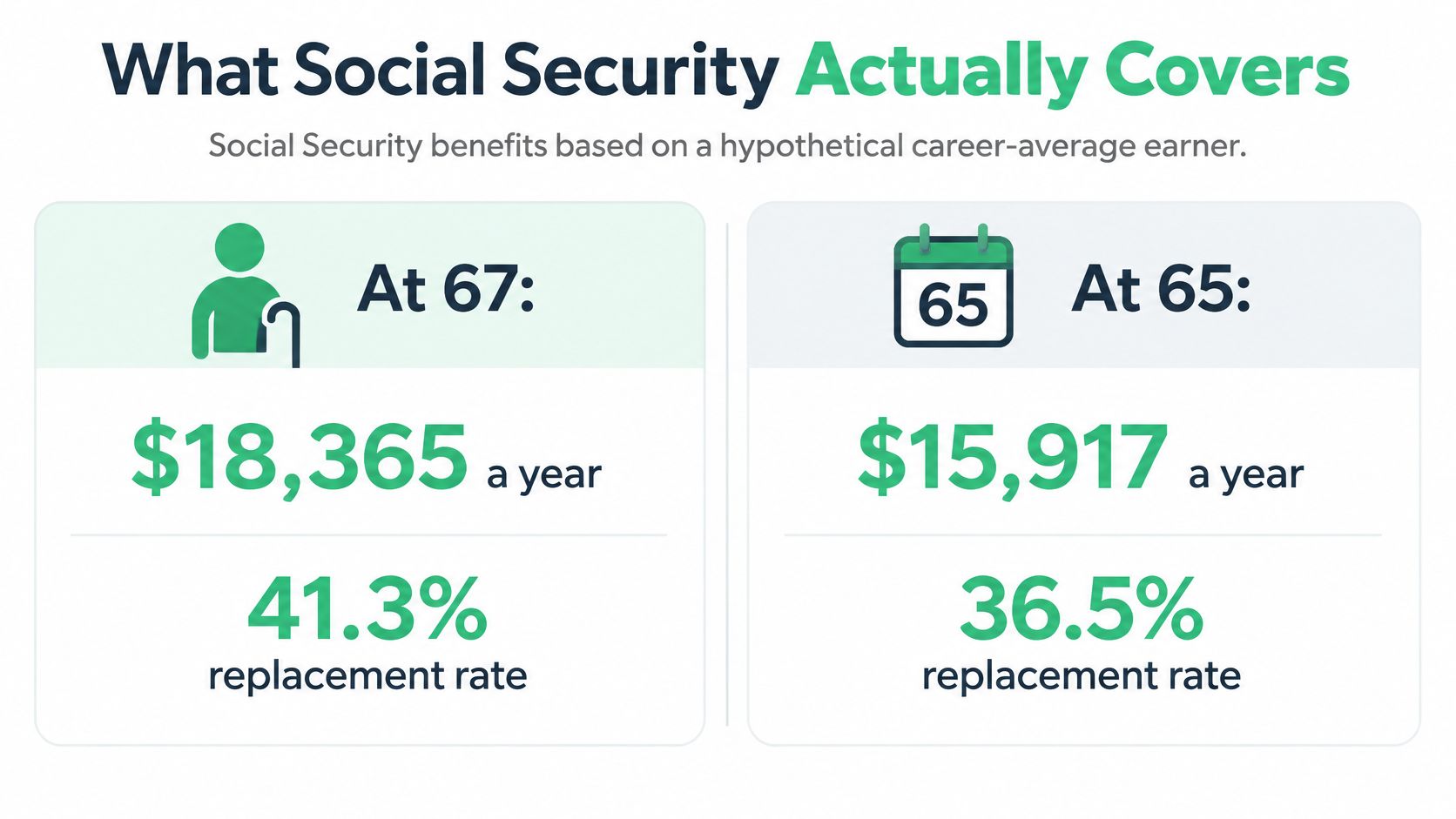
Social Security can provide a meaningful share of retirement income, but your estimate depends on your earnings record and when you claim. The Social Security Administration's 2026 estimates put annual benefits for a hypothetical career-average earner at $18,365 at age 67, replacing 41.3% of earnings, and $15,917 at age 65, replacing 36.5%. Use your own benefit estimate to set your income floor and guide decisions about when to take Social Security.
Build income you can control
The Federal Reserve's report on household economic well-being found that 67% of U.S. adults had assets designated to produce retirement income in 2023, including 60% with a tax-preferred retirement account and 29% with a defined-benefit pension. These groups overlap, so the percentages cannot be added to calculate how many people lack workplace coverage.
For variable-income workers, start by checking the Social Security estimate tied to your own earnings record. Then test your budget against a lower-earning year: that makes it easier to see how much of your expenses the benefit may cover when income has been uneven. A pension may add income for some retirees, but your own savings plan should account for the benefits and expenses you expect.
- Start with an IRA. You control the account independently of an employer.
- Add a business retirement plan when eligible. Self-employment profit can create additional contribution room.
- Consider an HSA only with qualifying coverage. A high deductible alone does not establish eligibility.
- Use taxable investing for additional savings. You can continue investing after capped accounts are full.
Planning principle: Set your retirement budget using your own expected benefits and expenses, rather than someone else's average account balance.
Contribution limits change, so check the current-year rules before setting transfers. Your Social Security estimate gives you one part of the picture; the accounts available to you determine how you can build the rest.
The 2026 Accounts That Replace a 401k
A missing workplace 401(k) changes who chooses the plan and how contributions get made. For an employee, the main options are an IRA and, if health coverage qualifies, an HSA. Self-employed workers may also have access to a SEP IRA, SIMPLE IRA, or solo 401(k).
2026 retirement accounts without a workplace 401(k)
| Account | Who can use it | 2026 contribution cap | Tax trait that matters |
|---|---|---|---|
| Traditional and Roth IRA combined | Worker with taxable compensation | $7,500 under 50; $8,600 at 50 or older | Traditional contributions may be deductible; Roth contributions are after-tax, with tax-free qualified withdrawals |
| Spousal IRA | Spouse with little or no own earnings, married filing jointly | Same individual cap; household total $15,000, or $17,200 if both are 50 or older | Each spouse owns a separate IRA; sufficient household compensation is required |
| Health savings account | Person enrolled in an eligible high-deductible health plan | $8,750 for family coverage | Contributions may be deductible, and qualified medical withdrawals are tax-free; HSA capacity is separate from IRA capacity |
| SEP IRA | Self-employed person or employer | Lesser of 25% of compensation or $72,000 | Employer contributions, rather than employee salary deferrals |
| SIMPLE IRA | Small employer, including a self-employed owner | $17,000 general employee deferral limit, according to the IRS SIMPLE IRA contribution guidance | Employee deferrals plus required employer contributions |
| Solo 401(k) | Self-employed owner with no employees other than a spouse | $24,500 employee deferral; $72,000 combined additions before eligible catch-up contributions | Owner contributes as employee and employer; employer calculation uses qualifying earnings |
| Taxable brokerage | Anyone | No annual contribution cap | Sales can trigger capital-gains tax; no retirement-account deduction |
The IRA limits follow the IRS IRA contribution-limit guidance. The combined traditional-and-Roth IRA ceiling is $7,500 in 2026, rising to $8,600 for eligible older savers. Contributions generally cannot exceed taxable compensation.
For a self-employed owner, the solo 401(k) employee deferral limit is $24,500, and total annual additions are capped at the lesser of 100% of compensation or $72,000 before eligible catch-up contributions, under the IRS retirement-plan contribution guidance.
Choose an IRA by tax treatment
An IRA is the wrapper; the investments inside it determine the return. After opening the account, you still need to choose investments. Otherwise, your retirement strategy may become a rather elaborate cash-storage arrangement.
A traditional IRA contribution may reduce current taxable income. Whether it is deductible depends on your circumstances, including income and workplace-plan coverage for you or your spouse.
A Roth IRA uses after-tax contributions, and qualified withdrawals can be tax-free. That may appeal to someone whose current tax bracket is modest and who expects a higher bracket later, though future tax law is uncertain.
The IRS's draft Form 8606 instructions set the 2026 Roth IRA phase-out range at $153,000 to $168,000 of modified adjusted gross income for single filers and heads of household; for married couples filing jointly, the range is $242,000 to $252,000. Direct Roth contributions are unavailable at or above the upper threshold.
Modified adjusted gross income, often shortened to modified AGI, is a tax calculation. It may differ from the salary on an offer letter because bonuses, business earnings, deductions, and other tax items can affect the result.
A spousal IRA follows the same basic rules as an individual IRA. The couple needs sufficient qualifying compensation, and each spouse owns a separate account. The household contribution limit reflects the two individual limits, not a joint account.
Give business profits their own plan
A profitable owner-only business may have more contribution options than an IRA alone. A solo 401(k) allows contributions in both employee and employer roles, subject to the applicable limits.
The trade-off is administration. You are responsible for operating a retirement plan, so compare setup costs, paperwork, investment expenses, and contribution support before choosing one.
A SEP IRA may suit a business owner who wants easier administration and flexible employer contributions. Its contribution limit is based on compensation, not a percentage of gross business receipts. SEP contributions also do not increase the personal traditional-and-Roth IRA limit.
A SIMPLE IRA is designed for a small business with employees. Required employer contributions make it a decision about the business's payroll and plan obligations, not just another account for the owner.
Use an HSA only when the health coverage fits
The IRS's Publication 969 sets the 2026 family-coverage HSA limit at $8,750, separate from IRA contributions. Eligible contributions can be deductible, investment growth is generally tax-free, and qualified medical withdrawals are tax-free.
The health plan must qualify first. Choosing unsuitable or expensive coverage just to gain access to an HSA can defeat the point.
A taxable brokerage account offers flexibility once you are considering savings beyond retirement-account limits. It has no annual contribution ceiling, but selling investments can create taxes, and market losses remain possible.
Fund Accounts in This Order
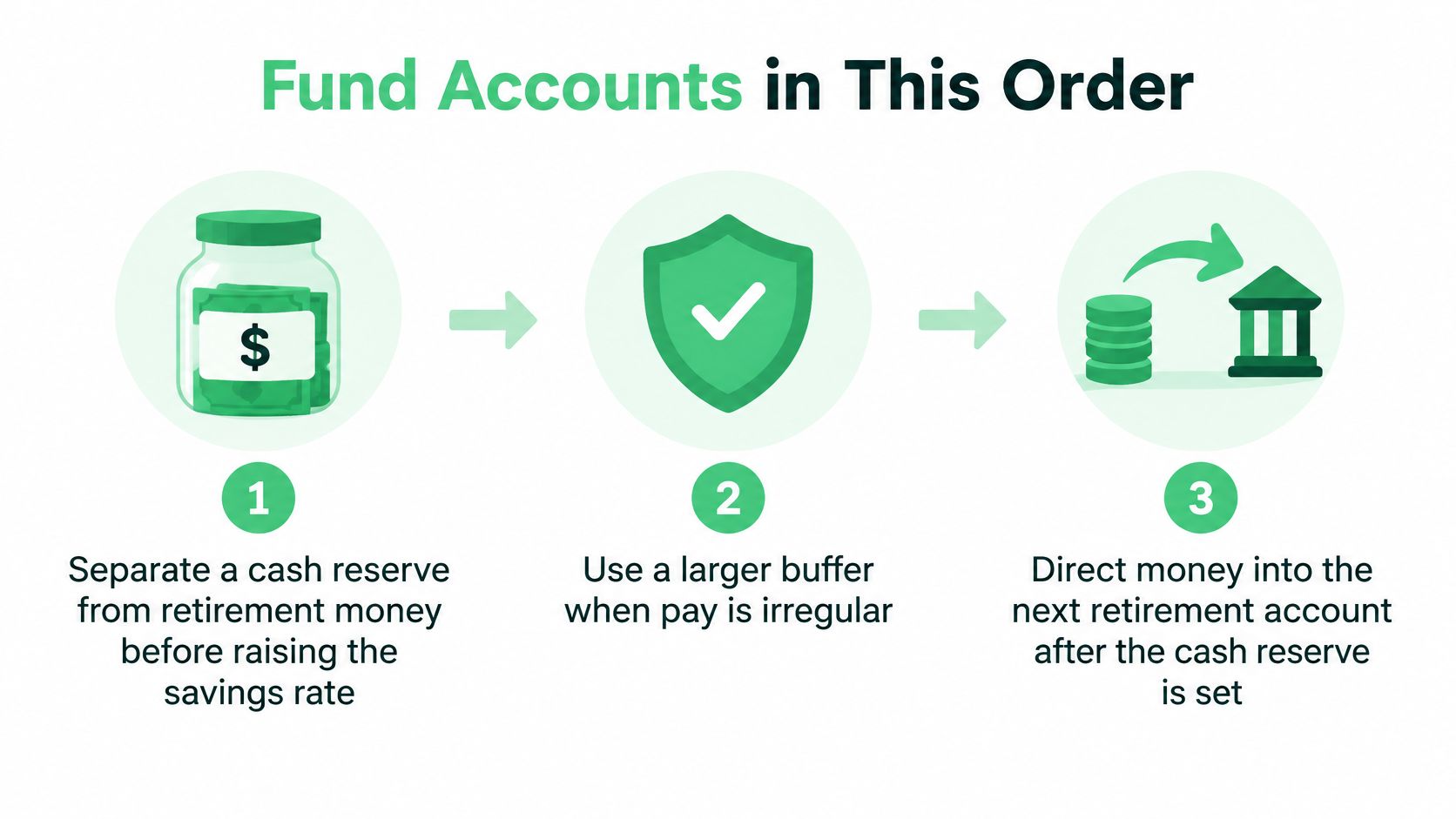
The most useful contribution order protects you from having to undo your retirement saving later. A tax deduction loses some charm when a car repair forces an expensive withdrawal.
Protect the next paycheck first
-
Separate emergency cash from retirement investments. Keep the reserve liquid, such as in a savings account. A worker with unpredictable client payments needs more breathing room than someone with a reliable paycheck and stable expenses. Choose a minimum balance that covers essential bills through a plausible payment delay.
-
Attack high-interest debt before stretching to maximize an IRA. Your credit-card interest is a contractual expense; investment returns are uncertain. In a hypothetical case with a card charging 20% APR, I'd prioritize the card after establishing a basic buffer rather than borrow at that rate to invest.
The scheduled Saver's Match changes the future comparison for eligible savers, but it doesn't make expensive debt harmless. Opening an eligible retirement account and contributing modestly may be sensible preparation, while committing your entire spare cash balance could leave you borrowing again. Compare the actual match you qualify for, the interest you'll incur while carrying the debt, and the consequences of needing that contribution back.
A retirement contribution you can leave invested is more useful than an ambitious contribution you'll need to withdraw.
Direct the remaining money deliberately
-
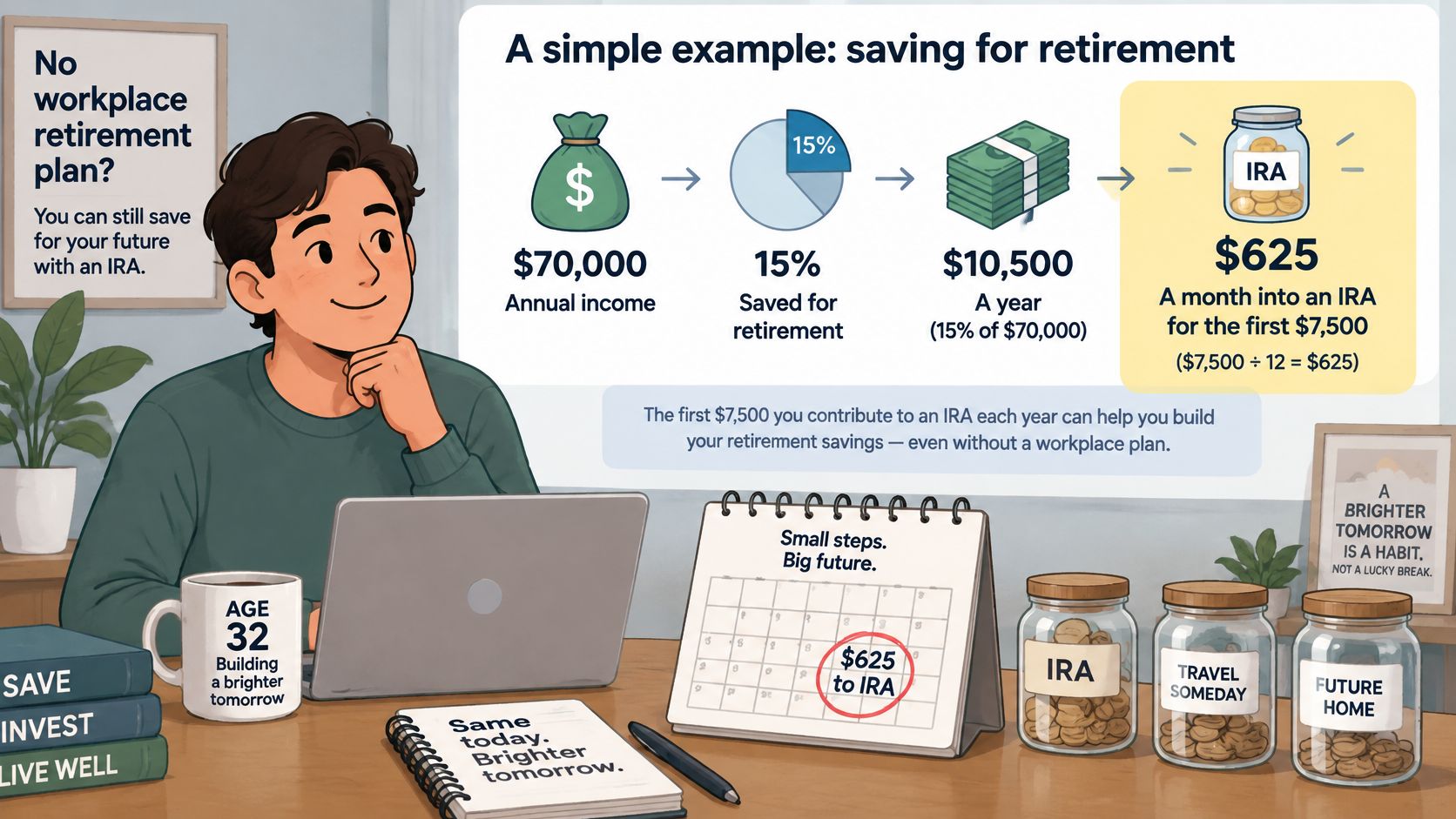
Fund your IRA consistently. The IRS's 2026 limit announcement sets the regular IRA ceiling at $7,500, equivalent to $625 a month, with an $8,600 limit for eligible savers age 50 or older. Use an affordable automatic amount rather than assuming you must reach the maximum immediately.
-
Consider an eligible HSA next. Preserve enough cash for current medical bills before investing the balance for longer-term expenses. Medical spending doesn't become optional because you've decided to optimize taxes.
-
Add a self-employed plan when you have qualifying business profit. Base contributions on the appropriate earnings calculation, not revenue before expenses. A plan's advertised maximum is a ceiling, not permission to ignore compensation rules.
-
Send additional long-term savings to taxable investments. Choose diversified, low-cost funds instead of assembling a collection of speculative bets. Diversification spreads exposure across investments, though it can't prevent losses.
For variable income, reserve taxes before applying your savings percentage. Reconcile contributions across institutions quarterly, especially if you use more than one IRA.
If you're unsure how much to invest each month, start with the amount left after essential expenses, debt payments, and your cash-buffer requirement. Increase it when your finances support the increase. Your Roth IRA shouldn't be your emergency fund wearing a brokerage password.
Where the Money Sits and How It Comes Out
A household earning $70,000 that saves 15% sets aside $10,500 a year. After the IRA contribution described above, $3,000 a year, or $250 a month, remains for taxable investing, unless an eligible HSA gets some of it first. Your family budget sets the starting rate; the example shows how to allocate savings at that rate.
Choose investments separately from accounts
Choose between Roth and traditional IRA contributions based on your tax situation. A Roth IRA can suit someone in a relatively modest current tax bracket who meets the income rules. A deductible traditional IRA can be appealing when your current bracket is higher than the bracket you reasonably expect in retirement.
The IRS explains IRA contribution and deduction rules in Publication 590-A. Check both before counting on a deduction: being eligible to contribute doesn't automatically make the contribution deductible.
For a starting stock-and-bond mix, The Money Maniac recommends 110 minus your age for the stock percentage, with the rest in bonds. Adjust for your time horizon and comfort with market losses. A formula gives you a starting point, not a forecast of how a downturn will feel.
- Spread stock exposure broadly. Avoid tying your retirement to a few companies.
- Rebalance on a calendar. Restore your intended mix instead of reacting to headlines.
- Consider tax location. Broad growth-oriented funds can fit taxable accounts, while income-heavy holdings can fit tax-advantaged accounts, depending on your overall allocation.
Understand the exit before contributing
How money comes out by account type
| Account | Before 59½ | At 59½ or later |
|---|---|---|
| Roth IRA | Contributions generally come out tax-free and penalty-free. Earnings generally face tax and an additional tax unless an exception applies. | Qualified withdrawals are tax-free once the applicable five-year rule is met. |
| Traditional IRA | Taxable withdrawals generally face ordinary income tax plus a 10% additional tax unless an exception applies. | Taxable withdrawals face ordinary income tax. |
| HSA | Qualified medical withdrawals are tax-free. Nonmedical withdrawals generally face income tax plus a 20% additional tax. | The extra nonmedical-withdrawal tax continues until 65. After 65, nonmedical withdrawals face ordinary income tax without that extra tax. |
| Taxable brokerage | No retirement-age restriction. Sales can create capital gains. | The same rule applies. |
An HSA's age threshold for avoiding the extra tax on nonmedical withdrawals is later than the usual IRA withdrawal threshold. For a traditional IRA with nondeductible contributions, track your basis, meaning the portion you've already paid tax on. That affects how much of a withdrawal is taxable.
Vanguard's 2025 How America Saves report found that, among workplace participants permitted to withdraw, 4.8% took a hardship withdrawal and 4.5% took a nonhardship withdrawal. Those figures describe workplace participants, not IRA owners, but show why it helps to set a clear boundary for retirement money.
Write yours plainly: retirement accounts don't pay routine bills. Keep emergency cash elsewhere, and check the applicable distribution rules before withdrawing.
Saving When Paychecks Bounce Around
A percentage-based rule adjusts when freelance, contract, service, or side-hustle income changes. A fixed monthly transfer can work until a client treats the payment date as a creative suggestion.
Choose a percentage of income available after business expenses, then review the amount you've contributed across accounts each quarter. That gives each deposit a clear rule while helping you avoid exceeding an account's annual limit.
Make the transfer fit the deposit
In a hypothetical good month with $4,000 available, a 10% savings rule sends $400 to retirement. In a thin month with $1,500 available, it sends $150. Both contributions count toward the same annual IRA allowance.
Lower the percentage when cash is tight. Pause transfers if they would put essential bills or tax payments at risk, then review the percentage at your next quarterly check. A sustainable contribution is easier to keep than an ambitious one you repeatedly have to reverse.
Use a budgeting method for irregular income to decide how each deposit gets divided before it arrives.
Keep future incentives in perspective
Under SECURE 2.0, the Saver's Match is scheduled to begin in 2027, offering eligible taxpayers up to 50% of the first $2,000 contributed, potentially $1,000, according to the IRS retirement-saving update. Eligibility and qualifying-account requirements apply, so don't count on receiving the maximum.
If you're carrying expensive debt, compare its interest cost with the benefit of contributing to retirement. If you're borrowing to cover essentials, keep enough flexibility in your plan to avoid relying on new debt. The match may make eligible contributions more valuable, but it doesn't erase the cost of high-interest borrowing.
Irregular income also makes it tempting to sell investments after a market decline or spend money set aside for a quarterly tax bill. Review your contribution rule each quarter, and keep your investment plan separate from short-term cash needs.
Set One Automatic Transfer This Month
If cash is thin or your credit card charges a high rate, direct this month's automatic transfer toward the buffer or the card. You're improving your ability to invest without having to reverse course later.
Otherwise, open an account you qualify for and choose an affordable recurring contribution. For steady pay, use a monthly amount; for unpredictable income, apply a percentage to each deposit after reserving taxes.
Give the transfer a clear job
Regular investing means buying through different market conditions. Finzer's guide to dollar cost averaging for beginners explains that process, but a fixed schedule won't guarantee profits or protect you from losses.
Self-employed readers with dependable profits should price a solo plan before assuming an IRA is their ceiling. Compare administration and expenses alongside contribution capacity.
For projections, our compound-interest calculator lets you test monthly contributions using an assumed return, not a forecast. A FIRE-number target can wait until the saving habit is running.
This is educational guidance, and contribution limits change. Do your own research or consult a licensed professional before investing, particularly before making a large business-plan contribution.
Choose the destination, set the amount, and schedule the transfer this month. A modest instruction your bank follows beats a perfect allocation left in a notebook.
Get more posts like this
One short, useful email each Friday. Free, no spam, unsubscribe anytime.