What Is the Debt Avalanche Method: How It Actually Works
Learn what the debt avalanche method is, how it saves interest, and when it beats the snowball. Includes real math and worked examples.

Daniel Anderson
Editor, The Money Maniac
October 4, 2026
12 min read
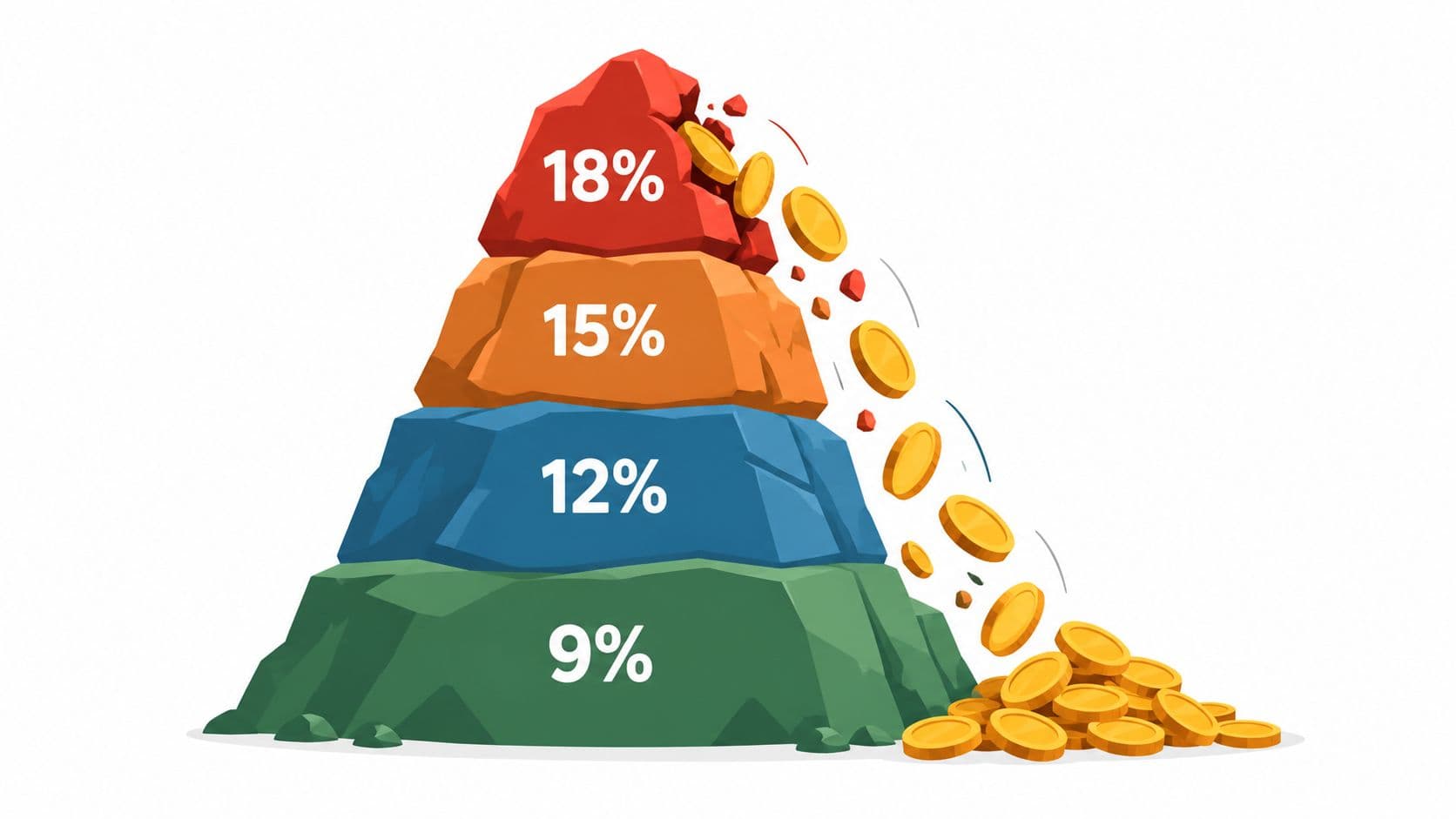
Have you ever wondered why two people with the same total debt can pay very different amounts to get rid of it? The answer often comes down to the order in which they attack their balances. If you have several credit cards, loans, or other accounts and a little money left after making minimum payments, that extra cash has a job to do. Choosing the right target can reduce interest, shorten the payoff period, or make the plan easier to follow.
The debt avalanche method is the numbers-first answer. It sends extra payments to the debt with the highest interest rate while you keep minimum payments current everywhere else. That approach usually minimizes interest, but it can feel slow when the most expensive balance is also the largest. The practical question is bigger than “what is the debt avalanche method?” It's this: Will the mathematically cheapest plan also be the plan you can follow without missing payments?
The Moment You Realize Interest Owes You Back
Suppose you've finally found room in your budget for an extra debt payment. The money isn't enormous, but it's enough to make a difference. You have a small credit card balance that could disappear quickly, another card charging a higher rate, and a loan with a lower rate but a larger monthly payment.
The tempting move is to erase the smallest balance first. You get a clean account, a visible win, and one fewer bill to think about. That's the logic behind the debt snowball method. The avalanche takes a different view: the balance charging the highest rate is the one demanding the most expensive rent for staying alive.
This creates the central tension. The avalanche prioritizes financial efficiency. The snowball prioritizes emotional momentum. Neither approach can help if you stop making payments, but the best order can differ depending on what makes you more likely to stay consistent.
A useful question: Are you trying to minimize the final interest bill, or are you trying to create enough early progress to keep the plan alive?
Imagine directing your extra money toward a small balance at a modest rate while a larger balance continues accumulating interest at a much higher rate. You may feel productive, but the expensive balance keeps charging you for the privilege. That cost can make the overall journey longer.
On the other hand, a high-rate debt can take time to eliminate if its balance is substantial. Watching the number decline without seeing an account reach zero can test your patience. A carefully calculated plan that you abandon is less useful than a slightly more expensive plan you complete.
Your wider budget matters, too. Before sending every spare dollar toward debt, consider whether you're leaving enough cash for essentials, irregular bills, and required minimums. A monthly investing guide can help frame that broader allocation question, although high-cost debt generally deserves serious attention before optional investing.
The avalanche is strongest when your cash flow is stable, your minimum payments are affordable, and your main objective is reducing interest. When those conditions don't hold, the “best” mathematical sequence may need a practical adjustment.
How the Debt Avalanche Method Works
The mechanics are straightforward. The discipline comes from applying them consistently and updating the list when your accounts change.
Build the ranking
Start by listing every debt, including its current balance, interest rate, minimum payment, and due date. Sort the debts from highest interest rate to lowest interest rate. Ignore balance size during this ranking step. A smaller balance can still be the wrong first target if another account charges more.
Then make the required minimum payment on every account. This protects your payment history and keeps the plan from creating a new problem while you solve the old one.
Direct the surplus
Send every extra dollar in the budget to the debt at the top of the list. Keep doing that until the balance reaches zero. Once it's gone, take the payment you were making there, including the former minimum payment, and add it to the next debt.
That rollover creates the “avalanche” effect. Your total debt payment can remain steady while the amount aimed at the current target grows after each payoff.
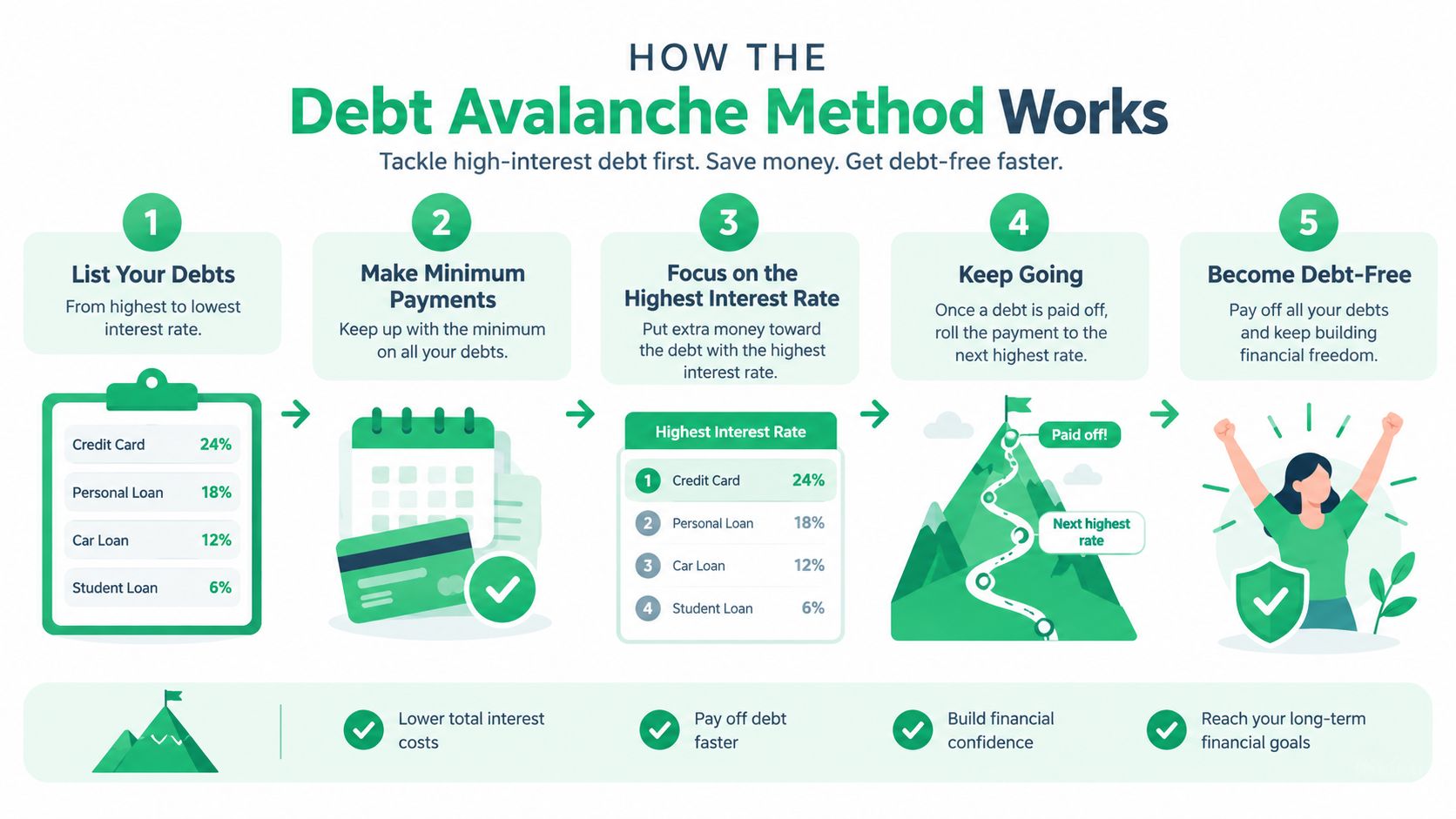
The reason this works is simple arithmetic. A higher APR applies a larger financing cost to the balance you carry. Removing that balance first reduces the amount exposed to the most expensive rate, which lowers future interest under fixed balances, fixed APRs, and no new borrowing. The method is mathematically the interest-minimizing order under those conditions, as explained in this academic discussion of the debt avalanche approach.
Here's a simplified illustration without pretending that every lender calculates interest in exactly the same way. If one account has a higher APR than another, each dollar left on the higher-rate account generally costs more to carry. Putting an extra payment on the lower-rate account may reduce a balance, but putting that same payment on the higher-rate account removes more expensive borrowing from the portfolio.
A peer-reviewed study of U.S. household debt portfolios found that for 38.7% of households, the repayment order was identical across the strategies examined. For 97% of those households, there was no difference in interest costs across the seven repayment levels studied. Under the avalanche approach, the median household paid $15,063 in interest before eliminating its debt, and across 999 portfolio-weight sets, the strategy produced average cost savings of $46.2 billion, equal to about $853 to $1,321 per household for 90% of observations. These findings are summarized in Fidelity's explanation of the debt avalanche method.
Those figures don't mean every borrower will save the same amount. Your result depends on balances, rates, payment size, fees, and whether rates change. For a practical second perspective on organizing repayment, UK debt repayment tips from Ronke Odewumi offers a useful discussion of planning and consistency.
Avalanche vs Snowball vs Minimum Payments
The three approaches answer different questions. The avalanche asks, “Which debt is costing me the most?” The snowball asks, “Which balance can I eliminate first?” Minimum-only payments ask, “How can I keep this month's cash outflow as low as possible?”
| Strategy | Ranking Rule | Primary Benefit | Primary Risk | Best Fit |
|---|---|---|---|---|
| Debt avalanche | Highest interest rate first | Minimizes total interest when payments remain steady | Early progress can feel slow | Borrowers focused on cost efficiency |
| Debt snowball | Smallest balance first | Creates quick account-level wins | May cost more interest | Borrowers who need visible momentum |
| Minimum payments | No extra payoff target | Preserves short-term cash flow | Keeps expensive balances outstanding longer | Temporary financial strain, with a plan to improve cash flow |
The avalanche generally wins on cost because it removes the most expensive borrowing first. The debt avalanche strategy explained by Key describes the same core benefit, prioritizing the highest APR to reduce interest paid over the long run.
The snowball can still be rational when motivation is the binding constraint. Paying off a small account may simplify your monthly obligations and give you evidence that the plan is working. That emotional reinforcement can matter if a slower avalanche payoff would lead you to stop contributing extra money.
Minimum payments serve a necessary role, but they're a weak long-term strategy when used without additional action. They protect account standing when paid on time, yet they don't aggressively reduce the balances generating interest. Short-term relief can become a long, expensive arrangement if the surplus never grows.
The decision rule is fairly clear. Choose avalanche when you can afford every minimum payment and care most about total cost. Choose snowball when quick wins are the difference between persistence and abandonment. Use minimum payments as a temporary stability tool when cash flow is tight, then reassess before treating that arrangement as a payoff plan.
Business owners managing several balances may also benefit from reviewing practical guidance on how to pay off business debt in 2026. For a broader comparison of payoff methods, see this guide to the best debt payoff plan.
Worked Examples That Show the Savings
A payoff method becomes easier to judge when you see what changes in the calculation. The key variables are the interest rate, the amount available for extra payments, and the point at which a freed payment rolls into the next balance.
Example one
A major bank's illustration shows an avalanche plan reducing total interest to about $45,340, nearly $12,000 less than minimum payments alone, while shortening the payoff period from 12 years to 9 years. Those figures come from the bank's example, not a universal promise. They show the possible scale of directing extra money toward the most expensive balance instead of distributing extra payments without regard to interest rate. The illustration is discussed in this explanation of how the avalanche method works.
The mechanism matters more than the headline savings. Minimum payments keep each account active, but they may leave high-rate balances in place for a long time. The avalanche concentrates the surplus, removes the costly target, and then adds the freed payment to the next target. That payment grows in effectiveness because the borrower keeps the same overall payoff budget while reducing the number of active balances.
You can reproduce the logic with your own statements. Write down the current APR for each account, sort the list, and calculate how much extra cash reaches the first target each month. Don't rank a balance by its size or by how annoying the bill feels. Rank it by the cost of carrying it, unless a cash-flow risk requires a different priority.
Example two
A separate consumer-finance example found that the avalanche could save $153 in interest and make the borrower debt-free in 40 months, which was one month sooner than the snowball alternative. The advantage is modest because the portfolio and payment pattern were different from the larger bank illustration, but modest savings still count. The method doesn't need to produce a dramatic result to be financially preferable.
That smaller example also illustrates an important point: the avalanche isn't automatically transformational for every debt portfolio. If rates are close together, balances are small, or the borrower has limited extra cash, the difference between strategies may be narrow. In those cases, adherence can matter as much as the mathematical edge.
Put your own numbers to work
A calculator can help compare total interest and payoff dates without relying on rough guesses. Use a debt repayment plan calculator to model the avalanche against other payment orders, then test what happens if your extra payment changes.
Keep the assumptions visible. A projection based on fixed APRs won't remain accurate if a rate changes, a minimum payment is recalculated, or new borrowing enters the account. The calculation is a decision aid, not a contract with your lender.
When the Avalanche Can Backfire
The highest APR is usually the best mathematical target. It isn't always the most urgent target for a household under pressure.
The main failure point is missed payments. If you direct every available dollar toward an extra payment but leave too little cash to cover minimums, essentials, or a bill arriving before payday, the plan can create fees, penalty APRs, and worsening credit damage. Saving interest on one account doesn't compensate for destabilizing the entire repayment system.
That risk deserves more attention because delinquency pressure is not evenly distributed across borrowers. U.S. household debt reached $18.8 trillion in Q1 2026, with 4.8% of outstanding debt in some stage of delinquency, while transition rates into delinquency remained high in several categories, according to the New York Fed's Q1 2026 household debt update.
Stability comes before optimization
Consider a borrower who can technically make all minimum payments only if no unexpected expense appears. Sending the remaining cash to the highest-rate card may look efficient, but it leaves no margin for timing problems. A smaller extra payment, a temporary pause in aggressive payoff, or a call to the lender may protect the plan better than maximizing this month's interest reduction.
Use this order of operations when cash flow is fragile:
- Protect required payments: Make sure every account's minimum payment is covered before allocating extra money.
- Protect essential bills: Housing, utilities, food, insurance, and necessary transportation come before optional acceleration.
- Address imminent delinquency: If one account is at risk of becoming late, keeping it current may be more urgent than following the APR ranking.
- Then optimize: Direct the remaining surplus to the highest-rate debt once the foundation is stable.
A quick balance payoff can also have behavioral value. The snowball may reduce the number of monthly obligations sooner, making the budget easier to manage. That benefit is difficult to capture in an interest calculation, but it can prevent the larger failure of abandoning the plan.
Practical rule: A payoff sequence is only efficient if you can keep making the required payments while using it.
Mixed-rate debt complicates the ranking
Credit cards, home equity lines of credit, and adjustable-rate consumer loans can change cost over time. A debt that ranked third when you built the list may move higher after an APR adjustment. Minimum payments can change as well, tightening the available surplus.
The New York Fed reported that aggregate delinquency remained 4.7% in Q2 2026, while transition rates into early delinquency rose for auto loans and mortgages. HELOC delinquency improved only slightly, indicating that pressure differed across borrowing categories, as described in the New York Fed's Q2 2026 update.
That uneven pressure changes the practical question. If the highest-rate balance is current but another account is close to delinquency, the urgent account may deserve attention first. Once the immediate risk passes, you can return to the avalanche order.
Don't interpret this as permission to ignore interest rates. Treat it as a safeguard against following a spreadsheet so rigidly that the household runs out of oxygen. The math should guide the plan, while cash flow determines what the plan can safely carry.
How to Adjust the Method for Variable Rates
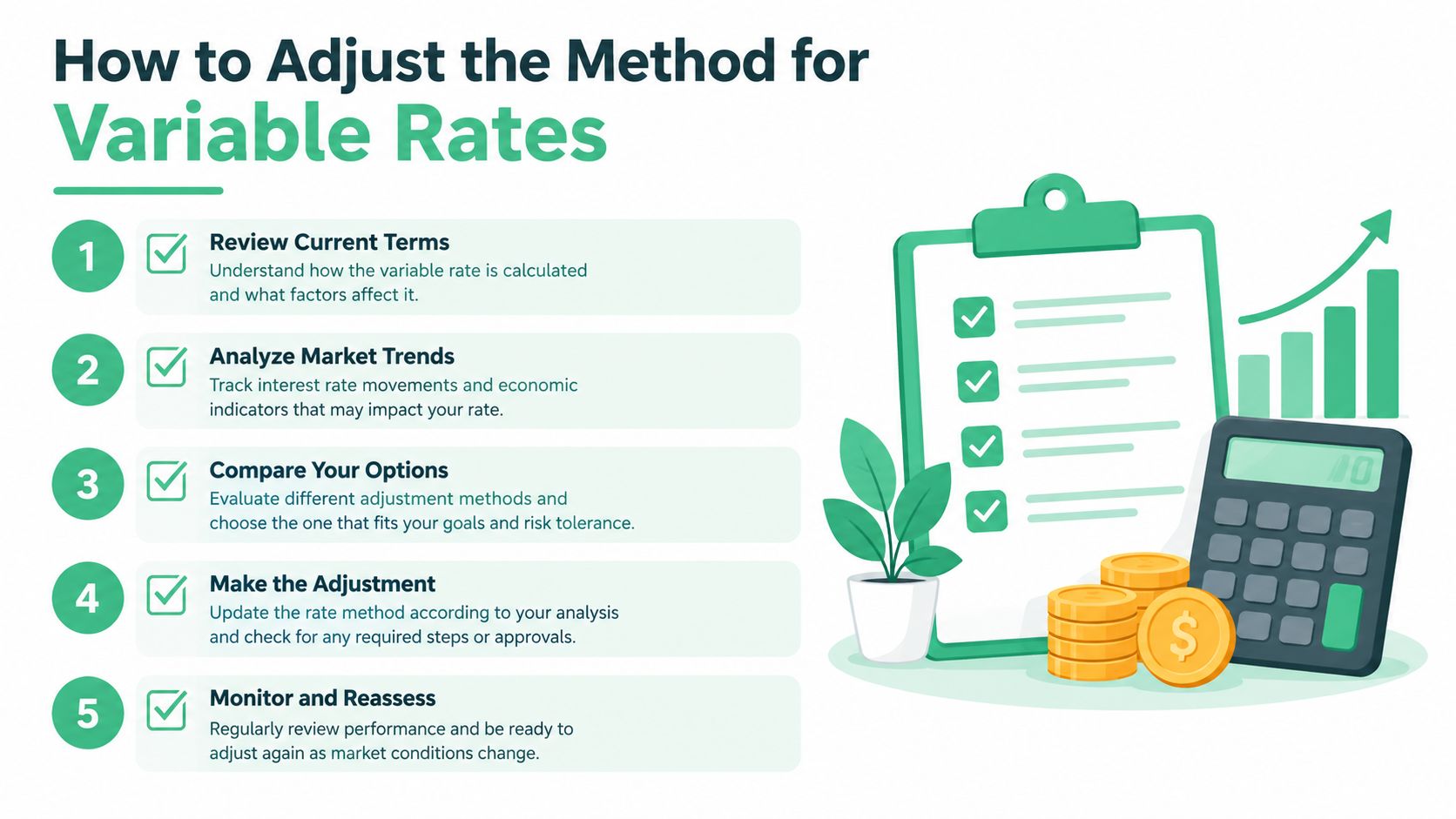
A single ranking works well for fixed-rate debts. Mixed-rate portfolios need maintenance. Credit cards, HELOCs, and adjustable-rate consumer loans can change their APRs or minimum payments, which may change the order that minimizes future interest.
Review the list monthly
Set a recurring monthly review. Check the current APR, balance, minimum payment, due date, and any recent rate or payment notice for every account. Then rebuild the ranking from highest current rate to lowest.
Fixed-rate debt stays easier to rank because its pricing is stable. Variable-rate debt needs a fresh look after a rate adjustment, a new statement, or a meaningful change in the minimum payment. Don't assume last month's order still applies.
A simple review can follow this sequence:
- Confirm payment safety. Cover all minimums and identify any account at risk of a late payment.
- Record current terms. Update rates, balances, minimums, and due dates.
- Separate urgency from cost. Mark accounts where delinquency would create an immediate problem.
- Rank the safe surplus. Direct extra money to the highest current APR unless an urgent account needs stabilization.
- Roll payments forward. When a balance reaches zero, add its former payment to the next target.
The highest APR remains the default target when the accounts are current and the rates are comparable in stability. The most urgent account may take priority when missing its payment would threaten the rest of the plan. That distinction keeps the method grounded in its real purpose, reducing debt cost without sacrificing basic financial stability.
The debt avalanche is my default recommendation for borrowers with reliable cash flow and a clear interest-saving goal. Start by listing every balance and rate, make all minimum payments, send the surplus to the highest APR, and review the ranking each month. If the plan leaves you one surprise expense away from delinquency, reduce the aggression before the math turns into a liability.
Get more posts like this
One short, useful email each Friday. Free, no spam, unsubscribe anytime.