How to Build an Emergency Fund Fast in 2026
Learn how to build an emergency fund fast with a tactical plan, real timelines, and smart automation. Practical steps for hitting your first $1,000.

Daniel Anderson
Editor, The Money Maniac
October 5, 2026
12 min read
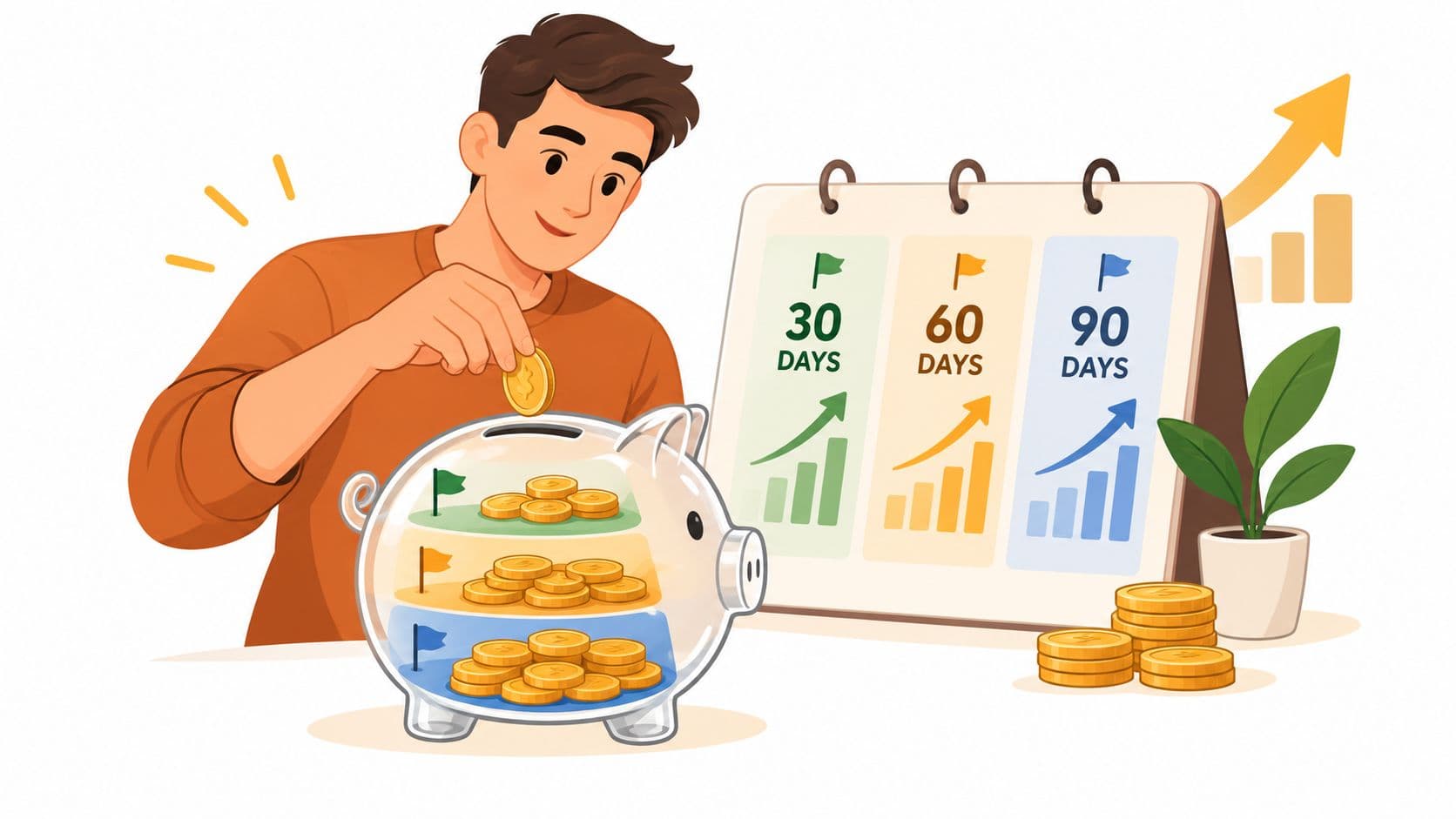
A car repair lands in your inbox, and suddenly payday feels much farther away than it did yesterday. You and your partner sit at the kitchen table, looking at the bill, the checking balance, and the rent money you promised not to touch. One of you suggests using a credit card. The other suggests moving money from somewhere else. Neither suggestion solves the uncomfortable truth: a routine financial shock has become a crisis because there was no cash buffer.
That moment doesn't mean you lack discipline. It means your savings system had no layers. How to build an emergency fund fast starts with smaller milestones, aggressive but survivable cash-flow moves, and an account that keeps the money safe without making it too easy to spend. The plan below gives you a practical route through the first 30, 60, and 90 days, with clear targets and no dependence on heroic willpower.
The Moment Everything Changes
An emergency fund earns its keep before you ever withdraw from it. The money gives you options when the car fails, your hours are cut, or an urgent medical expense arrives. Without it, you may be forced to choose between a necessary bill and another necessary bill, while interest joins the conversation.
The data explains why a first milestone matters so much. A 2026 Bankrate survey found that only 47% of Americans had enough liquidity to cover a $1,000 emergency, and just 46% had enough emergency savings to cover three months of expenses. Bankrate's emergency savings report also shows why a fast-building plan should focus on the first usable reserve rather than treating a full cushion as the starting line.
Practical rule: Your first emergency fund job is to stop a small surprise from becoming expensive debt.
A starter reserve changes the decision at the kitchen table. You might still dislike the repair, but you can pay it without raiding rent money or waiting for a paycheck. That distinction matters. Financial stability rarely arrives as one dramatic transformation. It usually appears as a series of balances that make fewer emergencies urgent.
Start with the first useful layer
Empower reported a median emergency savings balance of $500, while more than one in five Americans had no emergency savings at all. Those figures make a modest first target sensible, especially for households dealing with rising essentials. Empower's emergency savings research also supports the broader point that inflation can block saving even when a person is trying to cut back.
The fastest sustainable approach is therefore a milestone race against rising costs, not a test of personal virtue. Build a starter reserve, automate the next contribution, and use every major cash-flow opening to move toward the next layer. You don't need to solve your entire financial life this month. You need to make the next surprise less destructive than the last one.
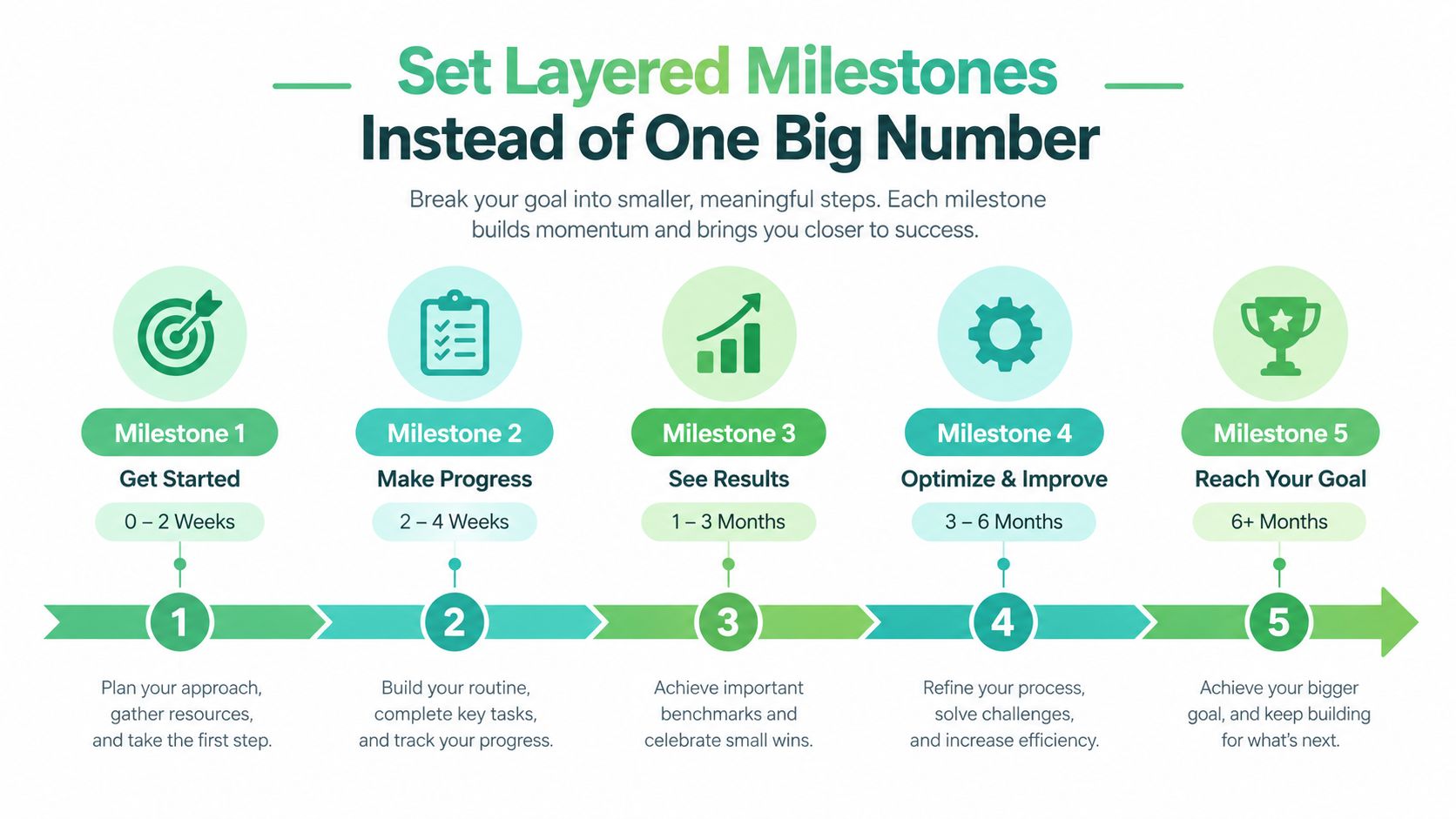
Set Layered Milestones Instead of One Big Number
“Save six months of expenses” is a useful destination, but it is a poor starting instruction. The target feels distant, and it hides the protection you can build before reaching it. Set milestones that create value at each stage, then race inflation by moving to the next layer as your cash flow allows.
The four milestones
-
Reach a starter reserve of $500. This amount can handle smaller urgent costs and give your monthly budget room to absorb a surprise. The Federal Reserve reported that 63% of adults would cover an unexpected $400 expense with cash, savings, or a credit card paid off on the next statement. Use that finding as a practical test of liquidity, not as a reason to stop saving. The Federal Reserve's Survey of Household Economics and Decisionmaking supports the distinction between having accessible cash and relying on future income.
-
Build toward $1,000. This buffer can cover a larger repair, urgent travel, or another bill that does not fit your normal monthly budget. It also reduces the number of times a small emergency turns into a borrowing decision. Keep contributing after you reach it.
-
Save one month of essential expenses. Add up the bills you must keep paying, including housing, groceries, insurance, transportation, minimum debt payments, and necessary medication. Leave optional spending out of the calculation. This layer protects your regular budget during an income interruption or after a large bill arrives.
-
Climb toward three months of expenses. Three months is a practical benchmark, not a guarantee that every disruption will be covered. The St. Louis Federal Reserve's discussion of emergency funds explains why measurable coverage milestones matter. Bankrate's household emergency savings report provides another reference point, but do not turn any survey result into a personal finish line.
Your timeline depends on redirectable cash, not motivation. A household with steady surplus may reach the starter layers during the first 30 days and continue building over the following 60 days. A household with less room in its budget may need longer. That is a planning constraint, not a personal failure. Protect the next milestone instead of abandoning the plan because three months looks far away.
Use The Money Maniac's guide to saving $5,000 in a year to turn a large target into recurring contributions. Calculate the gap, assign each payday a transfer, and raise it when a temporary expense ends.
Free Up Real Cash in the First 30 Days
The first month should be an extraction exercise. Look for money already moving through your household, then decide whether to reduce spending, create income, or capture a windfall. Inflation matters here. 57% of Americans said high inflation and price increases held them back from contributing to emergency savings during the past year, according to the research cited earlier. That makes “just spend less” lazy advice. You need to identify which lever can produce cash without damaging your ability to keep earning.
Choose the lever that matches your constraint
If you have time but little earning flexibility, start with spending. Audit subscriptions, renegotiate utilities where possible, compare insurance, plan groceries around what you already have, and pause discretionary purchases for a defined period. A temporary cut is useful when it creates a repeatable monthly transfer. A cut that requires constant misery will probably disappear as soon as your attention moves elsewhere.
If your essential spending is already lean, use income. Freelance work, weekend shifts, tutoring, pet care, selling unused belongings, or monetizing an existing skill can provide a faster deposit than trimming small purchases. The best option is the one you can repeat without interfering with your primary job or health.
Windfalls deserve a rule before they arrive. Direct a tax refund, bonus, cash gift, rebate, or sale proceeds to the emergency account before the money gets absorbed into ordinary spending. Don't build a plan around a windfall you may not receive, but don't let an actual one vanish into vague “catch-up” spending either.
| Capital Recovery Method | Typical 30 Day Yield | Hours Required | Durability |
|---|---|---|---|
| Spending cuts | Depends on recurring expenses you can safely remove | Low to moderate setup time | High when the cut removes a recurring leak |
| Side income | Depends on available work, skills, and schedule | Moderate to high | Medium, often temporary |
| Selling unused items | Depends on what you own and buyer demand | Moderate | Low, since the item can be sold only once |
| Windfall allocation | Depends entirely on the windfall | Low | High if the deposit starts an automated system |
A useful decision rule is to pull the least painful high-impact lever first. Use spending cuts when you have obvious recurring leaks, side income when your budget is already tight, and windfalls when cash is available but lacks a destination. Combining a recurring cut with temporary income is more durable than relying on a single lucky sale.
If you're considering cash advance apps while waiting for income, treat them as a last-resort bridge, not as emergency savings. A cash advance can move a timing problem around, but it doesn't create a reserve and may add another obligation to a budget that is already under pressure.
For practical ideas on earning outside a primary job, the Money Maniac's side-hustle guide is a useful place to compare effort, skills, and potential fit. The objective isn't to collect side hustles like they're trading cards. It's to find one cash source you can direct to the first milestone.
Pick the Right Account and Automate Everything
Your emergency fund should be liquid, protected, and inconvenient enough that you don't spend it by accident. A high-yield savings account can offer a better rate than a traditional savings account while preserving access to cash. Current market lists show high-yield accounts around 4.20% to 5.00% APY, while the FDIC national average for traditional savings is around 0.37% to 0.66% APY. Investopedia's high-yield savings account guide provides the rate comparison and account context.
The rate isn't the whole decision. Use this checklist before opening anything.
- Verify the current APY: Avoid assuming a promotional rate will last. Check whether the advertised rate is variable, introductory, or conditional.
- Read the requirements: Some accounts require monthly deposits of $250 to earn the advertised rate, while others apply a 4.50% rate only to the first $5,000. CNBC Select's account review highlights why the fine print matters more than the large number in the headline.
- Check access speed: Find out how transfers work, how long withdrawals take to clear, and whether transfer limits could create trouble during a genuine emergency.
- Look for fees: Minimum-balance charges can steadily reduce the value of a small starting balance.
- Confirm deposit protection: FDIC insurance protects deposits up to $250,000 per depositor, per insured bank, per ownership category. The FDIC coverage guidance summarized by Fortune explains the limit and why a bank account can keep an emergency reserve protected without turning it into an investment portfolio.
Make saving happen before spending
Use payroll split deposit if your employer supports it. Otherwise, schedule an automatic transfer for the day after each payday, then divide the contribution into weekly movements if your pay schedule allows. Weekly transfers create more frequent evidence of progress and reduce the chance that a large monthly amount gets consumed before the transfer date.
Name the account for its job. “Emergency fund” works. “AC repair fund” or “Income gap reserve” can work even better because the label reminds you what the money protects.
Finally, keep the account away from daily spending. Don't attach a debit card, don't place it in a mobile wallet, and don't make it the default transfer destination for casual purchases. The account should be easy enough to reach during a real emergency, but not so visible that a restaurant bill can summon it.
The Money Maniac's guide to keeping money in checking can help you separate operating cash from reserve cash. That separation is a small administrative choice with a large behavioral payoff.
Treat the Fund Like a Bill, Not a Leftover
Savings left over after spending usually stays theoretical. Variable spending expands to fill available cash, especially when groceries, utilities, and other essentials keep rising. By payday, the “extra” money has developed a convincing alibi and disappeared.
Give the emergency fund a due date and a payee, yourself. Your paycheck should receive assignments in a fixed order:
- Cover essential bills and required payments.
- Transfer the emergency contribution.
- Fund necessary variable spending.
- Use the remaining amount for discretionary choices.
The order matters because it removes the monthly debate. You don't need to ask whether this month feels easy enough to save. You decide the amount in advance, then let the transfer happen before spending has a chance to claim it.
Name the bill: “Emergency reserve payment” is easier to protect than “whatever remains.”
A separate account reinforces the rule. Money in checking looks available, even when it has a future assignment. Money in a clearly named savings account creates a pause before you touch it. That pause is useful. Most unnecessary withdrawals happen because access is frictionless and the goal is vague.
Use a contribution that your current budget can sustain, then increase it after a recurring bill ends, a temporary cut becomes permanent, or extra income arrives. A smaller transfer that happens every payday beats a larger transfer that triggers overdrafts and gets canceled.
Automation also protects you when motivation drops. You will eventually have a tiring week, a busy month, or an evening when a “small treat” feels deserved. The system should keep working during those ordinary lapses in enthusiasm. Willpower is a poor payroll department.
When the Standard Three to Six Month Rule Does Not Apply
Three to six months of essential expenses is a useful reference point, but it isn't a personal diagnosis. The right reserve depends on how quickly your income could fall, how many people rely on it, and how difficult it would be to replace your job.
The Federal Reserve's emergency savings table reports that 55% of adults had set aside three months of expenses, while CFPB research cited in the same verified data found 24% of consumers had no emergency savings and 39% had less than one month of income saved. The Federal Reserve emergency savings table shows why a standard target should be treated as a direction, not a pass-or-fail test.
Match the reserve to the risk
A household with two stable incomes, no dependents, low fixed debt, and skills that remain in demand may reasonably prioritize a smaller initial target before building further. A single-income household, a commission-based worker, or someone in an industry facing contraction needs more cash because income replacement may take longer.
Health conditions, dependents, an unreliable vehicle, and high fixed housing costs all increase the amount you need. The target should cover essential expenses, not your full lifestyle.
| Situation | Recommended Target |
|---|---|
| Two stable incomes, low fixed debt, no dependents | Begin with one month of essentials, then reassess |
| One stable income with manageable fixed costs | Build beyond one month and work toward three months |
| Commission-based or freelance income | Aim higher than the standard benchmark as income volatility requires |
| Single earner with dependents | Treat three months as a checkpoint, not the finish line |
| Significant health, transportation, or job-stability risk | Build a larger reserve before diverting cash to less urgent goals |
A nine-to-twelve-month reserve can be reasonable for a single earner with a baby, variable income, or serious industry risk. Those are planning judgments, not universal rules. Start with the first layer, then adjust the final target when you understand how quickly your household could replace income and reduce expenses.
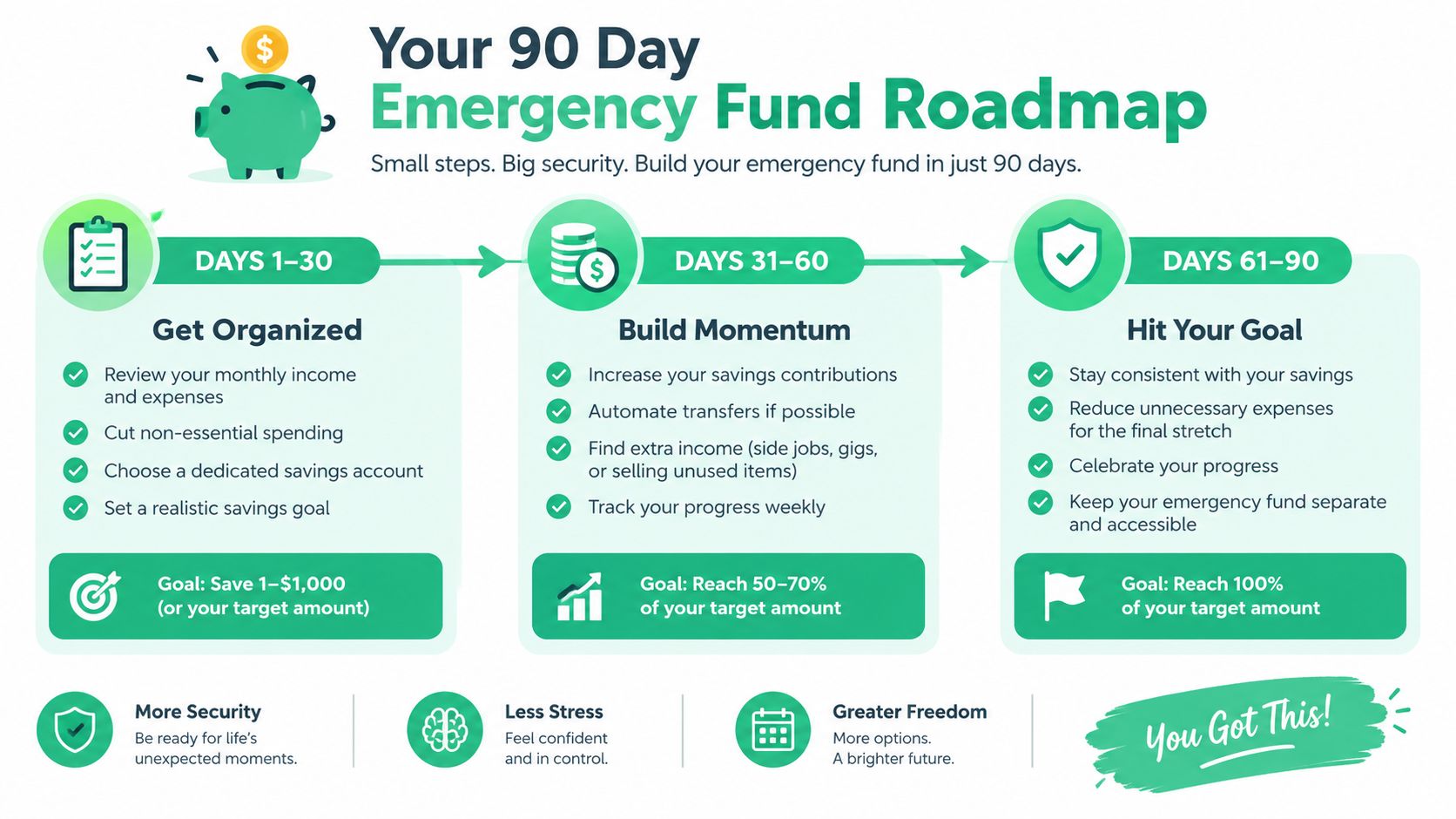
Your 90 Day Emergency Fund Roadmap
The first 30 days are for creating visible cash. Audit recurring spending, sell unused items, direct any available windfall to the reserve, and choose one income lever you can sustain. Your action today is simple: transfer the first contribution, even if the amount feels unimpressive. The point is to establish the account and its purpose.
Days 31 through 60 are for turning effort into machinery. Open the chosen high-yield savings account if you haven't already, confirm its rate and access rules, and set a transfer for the day after payday. Split the contribution into weekly transfers when practical. Your action today is to schedule the automation before the next payday arrives.
Days 61 through 90 are for pushing toward one month of essential expenses while protecting the progress you've made. Keep the starter reserve separate from planned purchases, continue the cash-flow lever that worked, and redirect newly available money when a temporary bill or cut changes your budget. Your action today is to calculate one month of essentials and write that number beside the account name.
At the end of the period, you may not have reached the ultimate target. You should have something more valuable than a motivational promise, though: a reserve with a defined job, a repeatable contribution, and a plan for the next layer. Set the first automation before you close this page. Momentum matters more than the exact dollar amount in the first week.
Get more posts like this
One short, useful email each Friday. Free, no spam, unsubscribe anytime.