How Can I Invest 1000 Dollars: A Starter's Guide
Learn how to invest $1,000 effectively with this practical guide covering ETFs, robo-advisors, and step-by-step execution for beginners.

Daniel Anderson
Editor, The Money Maniac
September 29, 2026
10 min read
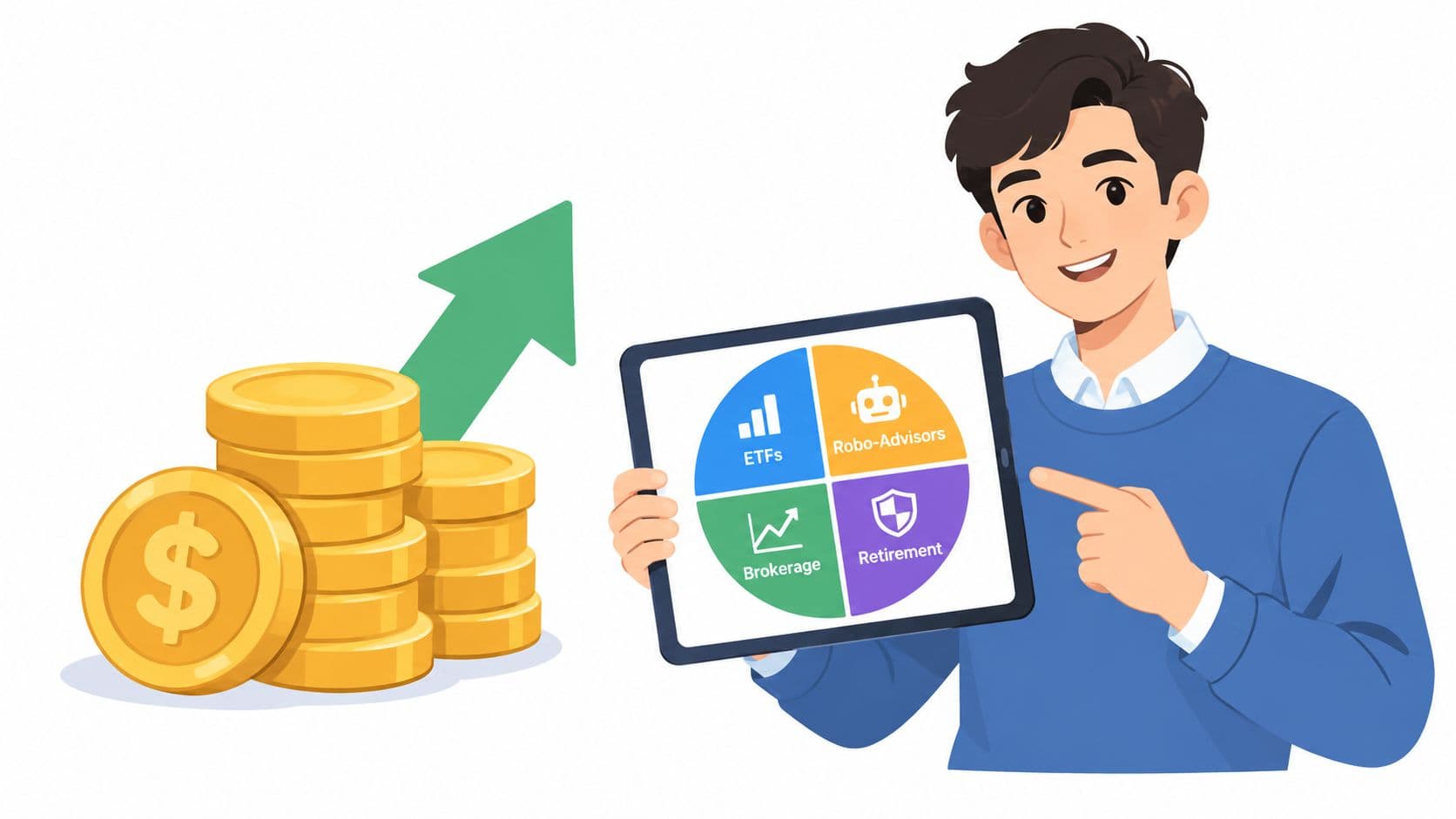
You've got $1,000 sitting in checking, savings, or perhaps an envelope that has somehow survived three moves. You want it to do more than idle, but you also don't want to gamble away money you may need for rent, a car repair, or an unpleasant medical surprise. The core question behind “how can I invest 1000 dollars?” is usually simple: does this money need to stay available, or can it remain invested for years?
That decision matters more than finding a clever stock. A thousand dollars is enough to begin with a diversified portfolio, especially because fractional investing has made small purchases practical. It's also enough to make a useful contribution to financial stability if your cash reserves are thin. The right first move depends on the job this money needs to perform.
What To Do When You Have $1,000 Ready to Invest
Maya has $1,000 in a high-yield savings account. She carries no expensive debt, but her emergency cushion would feel thin if her car needed repairs. Investing the full balance could support long-term growth, yet it would force her to sell if an urgent bill arrived. Selling during a market decline can turn a temporary cash shortage into a permanent loss.
Alex has the same $1,000. His emergency savings are already in place, and he expects to leave this money untouched for years. A diversified investment fits his situation better. The balances match, but the money has different jobs.
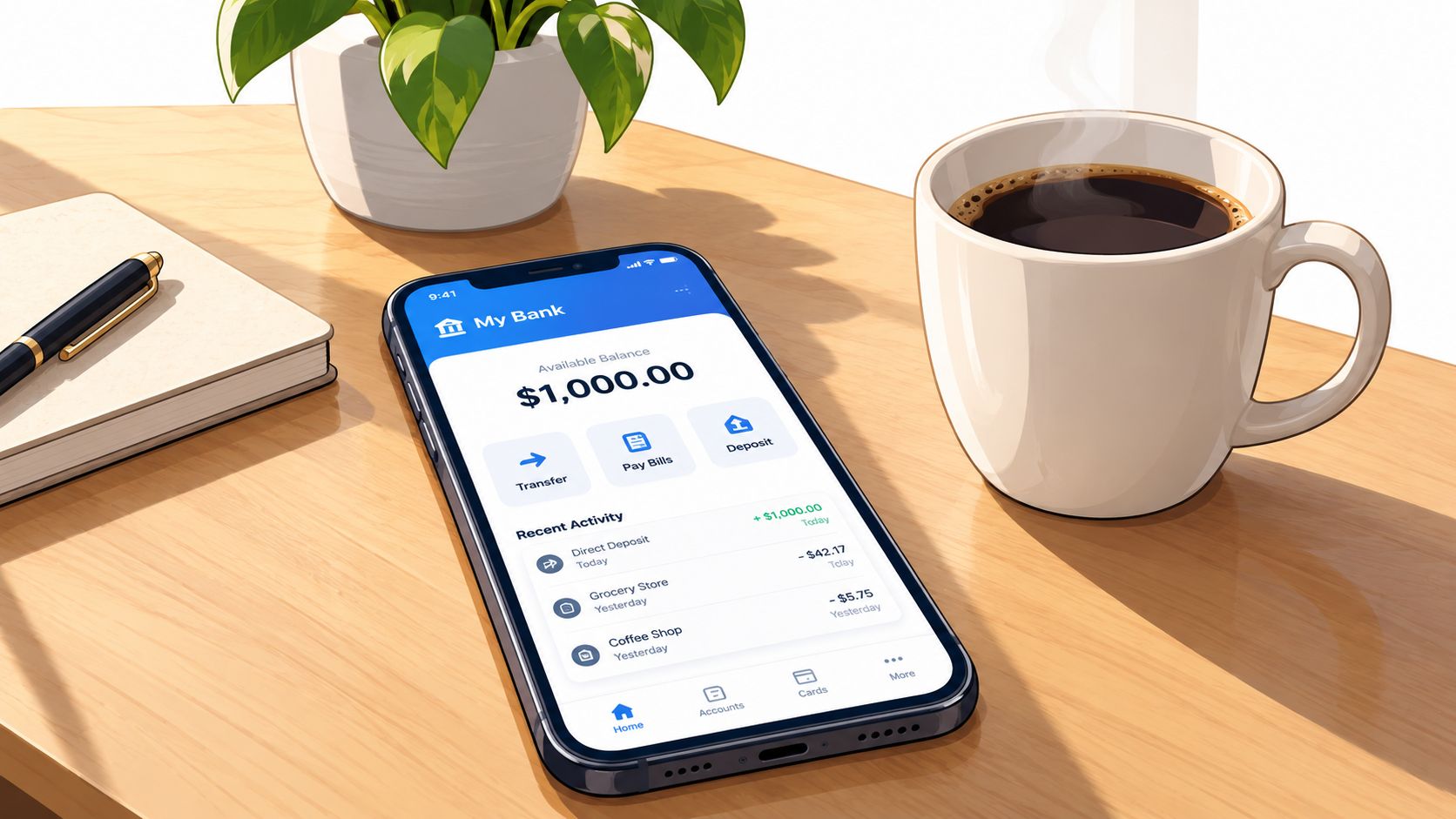
Start with the job, not the investment
Assign a time horizon before choosing an asset:
- Needed soon: Keep money for an expected near-term expense in a liquid, cash-like account.
- Emergency reserve: If this is your only buffer, access and stability may matter more than market returns.
- Long-term money: If you can tolerate price swings and leave the balance invested for years, a broad index fund or ETF offers a practical starting point.
- Mixed purpose: Divide the balance. One portion can protect short-term stability while the other begins a long-term portfolio.
A $1,000 balance is large enough to start, especially with fractional investing. Dollar-based portions of eligible stocks and ETFs let investors build diversified positions without buying a full share. Regulatory guidance on fractional shares explains why account size matters less than liquidity, fees, diversification, and time horizon. The trade-off remains clear: market assets can lose value, while cash generally offers easier access for immediate needs.
For background on account types, diversification, and basic decisions, read this beginner guide to investing. Then decide how much access you need before placing an order. Do not invest emergency money in assets that could lose value when you need to sell.
Practical rule: Give every dollar a time horizon before you give it a ticker symbol.
Why Your Money Grows Better in the Market Than in Cash
A $1,000 balance can sit safely in cash, or it can begin working toward a larger future goal. The right choice depends on when you need the money. Cash keeps the dollar amount relatively stable and provides quick access, while inflation can gradually reduce what that balance buys.
Historically, the S&P 500 has produced about a 10.56% average annual nominal return since 1957. Its long-run real return has been about 6.69% to 6.81% after inflation, depending on the source and measurement window, as summarized by historical market return data. “Nominal” means before inflation. “Real” adjusts for lost purchasing power.
That distinction matters more over years than weeks. If a $1,000 investment earned a return close to the historical nominal average for one year, the account could grow while its spending power increased by less after inflation. Long-term planning should focus on real growth because it better reflects what the money may eventually buy.
A simple compounding illustration
Using a 6.69% real annual rate as a historical reference, not a promise, $1,000 compounded for one year would become approximately $1,067 in inflation-adjusted terms before taxes and fees. After ten years, the same mathematical illustration would reach approximately $1,910 in today's purchasing power. The calculation shows how compounding works, but actual returns will be uneven, and some years may bring losses.
Long-run inflation-adjusted market data also estimates the S&P 500's total return since December 30, 1927 at 2,164%, equal to an annual real growth rate of 3.21%. More recent trailing periods showed real annualized returns ranging from 5.23% to 9.79%, depending on the period measured. Different starting dates create different outcomes, so historical figures provide context rather than a forecast.
Use this S&P 500 return calculator to test starting balances, contributions, and return assumptions. Run conservative scenarios beside historical ones. The exercise makes time, deposits, and inflation easier to weigh before committing your $1,000.
Why cash still has a role
Market investments can fall sharply over short periods. Cash usually offers less long-term growth, but it preserves liquidity and reduces the chance that you must sell during a downturn. A practical plan assigns cash to near-term obligations and diversified investments to money that can remain invested long enough to recover.
That trade-off is the core decision. A $1,000 investment does not need to transform your finances immediately. It needs a clear purpose and enough time for compounding to matter.
Choosing the Right Account Type for Your Goals
Before choosing an investment, choose the account that will hold it. The same diversified fund can behave differently for you depending on access, taxes, automation, and fees. For a beginner, three broad paths cover most decisions: a self-directed brokerage account, a robo-advisor, or a tax-advantaged retirement account.
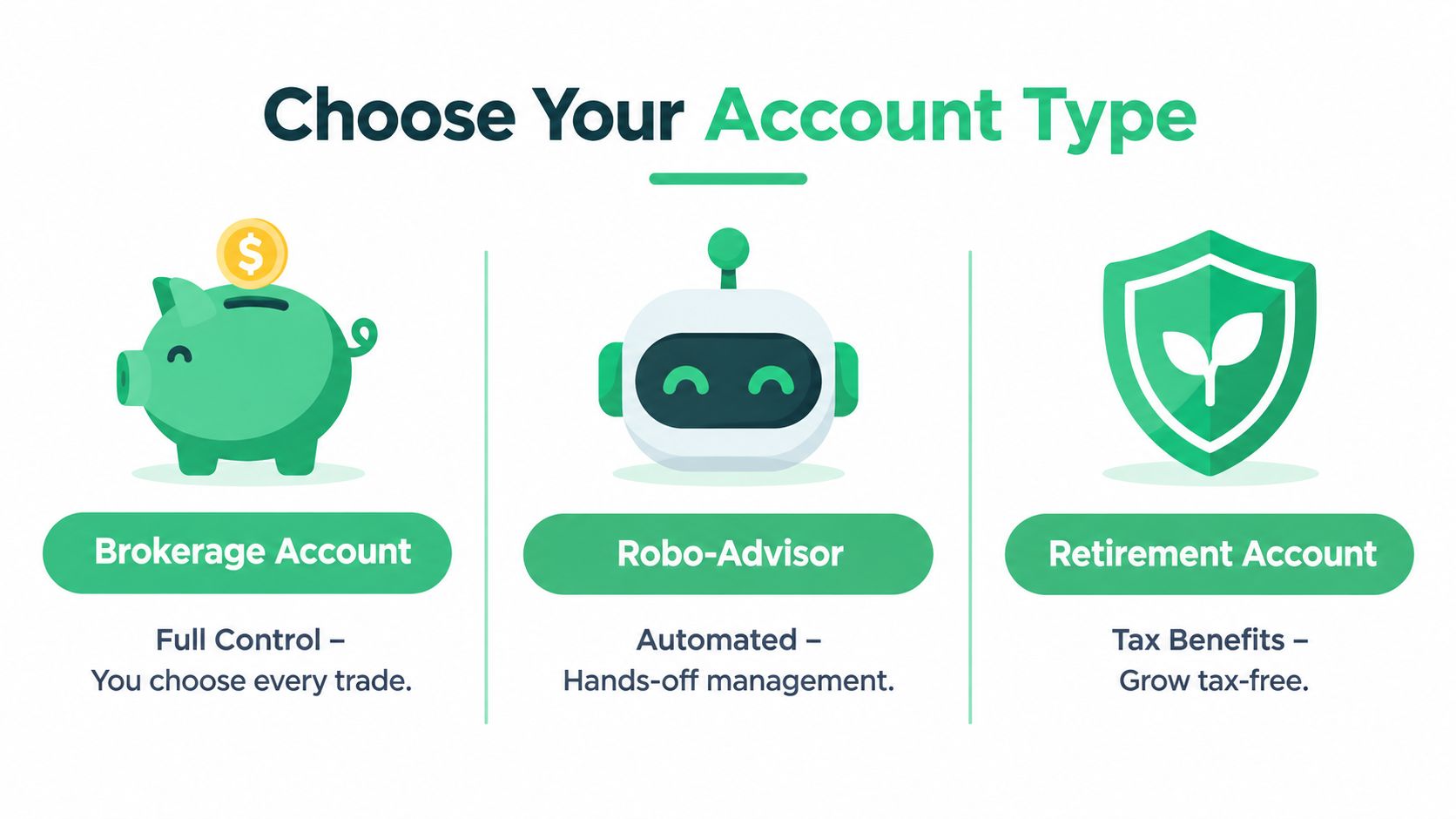
The three containers
| Account type | Control | Typical use | Main trade-off |
|---|---|---|---|
| Self-directed brokerage | You choose the investments | Flexible long-term or general investing | You must make allocation and rebalancing decisions |
| Robo-advisor | The service builds and manages a portfolio | Hands-off investing | Convenience may come with an additional management fee |
| Retirement account | You choose investments inside a tax-advantaged wrapper | Retirement savings | Withdrawals and tax treatment depend on the account rules |
A self-directed brokerage account gives you the most control. You can buy a broad-market ETF, decide how much to contribute, and avoid paying for portfolio management if you're comfortable handling the basics. The downside is behavioral, not technical. Some investors turn “full control” into frequent trading, concentrated bets, and a surprisingly expensive hobby.
A robo-advisor automates portfolio construction, contributions, and often rebalancing. That can help if you know you'll procrastinate or second-guess every decision. Review the fee schedule carefully, including any management charge and the expenses of the underlying funds. A small balance makes recurring costs more noticeable.
A retirement account, such as an IRA, can offer tax advantages for money intended for retirement. The choice between traditional and Roth treatment depends on your circumstances, including current and expected future taxes, eligibility, and withdrawal needs. This traditional versus Roth comparison is useful for understanding the basic distinction before you contribute.
Match the account to the deadline
Money for a flexible, non-retirement goal generally belongs in a taxable brokerage account if you can accept market risk. Money intended specifically for retirement may fit better in a retirement account, provided you understand the restrictions. A robo-advisor can be reasonable when automation prevents you from making costly emotional decisions.
Don't let a polished interface distract you from the fundamentals. Check whether the account has a minimum, whether the investments have expense ratios, how withdrawals work, and what happens if you stop contributing. The account is the container. The investment is what creates the exposure. You need to evaluate both.
How to Execute Your First Trade with Fractional Shares
A $1,000 account is large enough to start with a diversified position, yet small enough that fees, order mistakes, and poor liquidity choices can matter. Once the account fits the goal and the cash is available, placing the trade is straightforward.
Fractional shares let you buy part of a share instead of paying for a whole one. That makes a diversified fund accessible even when its share price exceeds the amount you want to invest. Many major brokerages allow eligible fractional purchases starting at $1. Check the current terms before transferring money, because minimums and eligible securities vary.
A repeatable first-trade process
- Open the appropriate account. Use the account selected for the money's purpose, whether taxable, automated, or retirement-focused.
- Confirm the costs. Review commissions, account fees, fund expense ratios, minimums, and fractional-order rules.
- Transfer the $1,000. Wait until the deposit is available for trading. A pending transfer may not be usable immediately.
- Choose diversified exposure. A broad-market index fund or ETF spreads the investment across many companies rather than depending on one business.
- Place the order deliberately. Select the investment, enter a dollar amount if supported, review the order type, and confirm the purchase.
- Set future contributions. Regular additions can matter more than repeatedly waiting for a perfect entry point.
Keep enough cash outside the trade for near-term needs. Investing the full balance may suit long-term money, but it creates pressure if an unexpected expense arrives. A $1,000 starting amount should support your plan, not force you to sell at an inconvenient time.
Platform rules differ. Check your brokerage's current terms for minimums, eligible securities, trading windows, order types, and fractional-order restrictions. Eligible purchases commonly start at $1 to $5, but the exact rules depend on the account and investment.
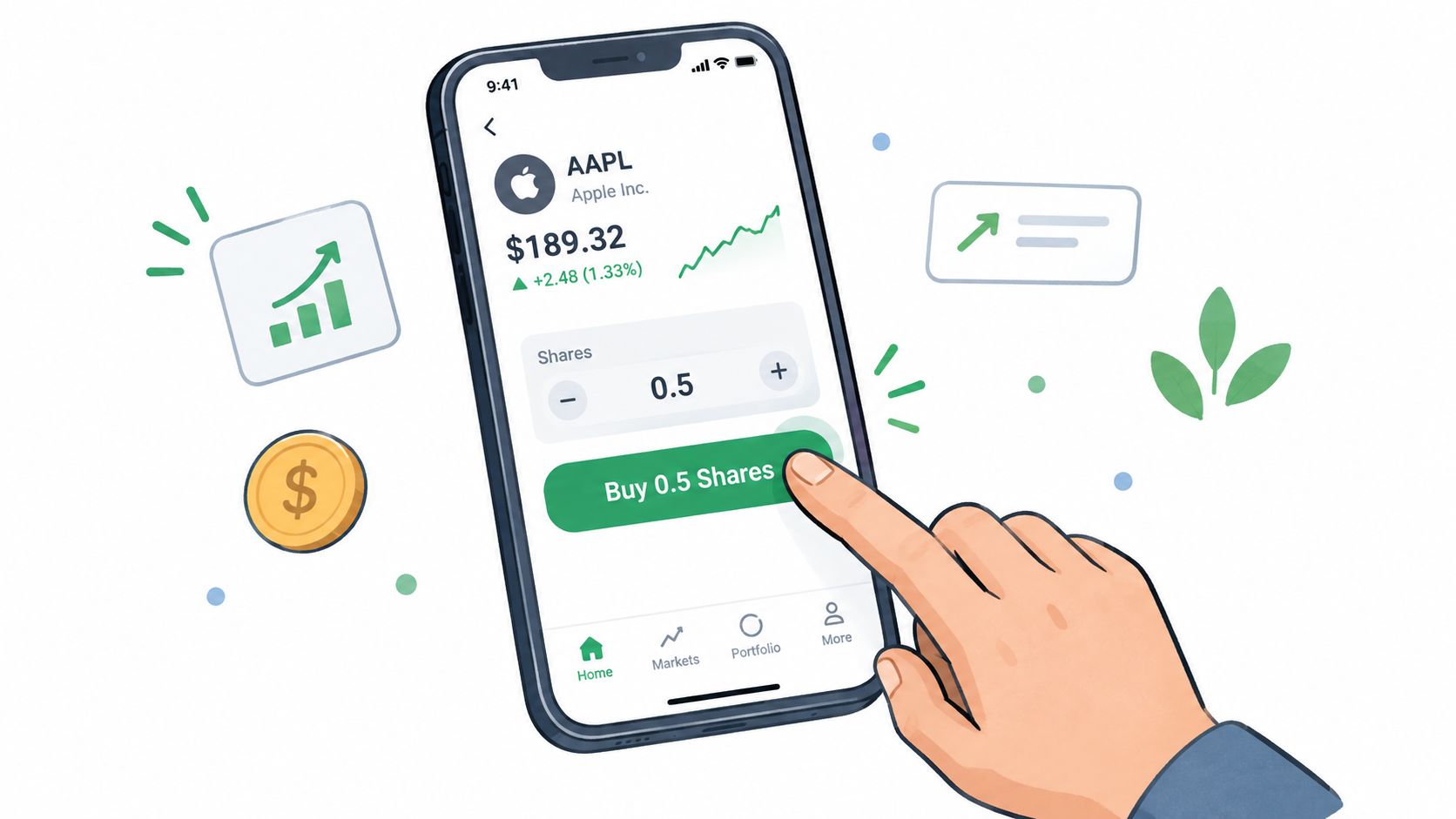
Keep the first purchase boring
A single-company stock can be engaging, but it does not provide broad diversification by itself. If you want to research individual businesses, use this guide on finding undervalued stocks to examine valuation and business quality. For a first $1,000, a broad fund usually creates a sturdier base than several speculative guesses.
Costs still matter. A broad ETF expense ratio of 0.03% would equal roughly $0.30 per year on a $1,000 position, according to the verified index-fund data. The dollar amount is small at first, but unnecessary charges continue as the balance grows.
Building a Simple Allocation Plan for Long-Term Growth
A $1,000 portfolio can do useful work when its design stays simple. For money you can leave invested, start with a low-cost, broad-market index fund or ETF, automate future contributions, and keep individual-stock speculation outside the core plan. The right allocation also depends on whether this money must remain available. Long-term compounding matters, but liquidity protects you from selling during a bad market.
The case for broad diversification is strong. According to long-term active-versus-passive research, 82% of actively managed U.S. funds underperformed their benchmark, while other research shows that only about 40% of active strategies survived and beat passive peers over the latest one-year window, falling to 25% over the decade through June 2026, according to SPIVA's U.S. scorecard. These results do not mean every active fund will fail. They make diversified passive exposure the more defensible starting point for a beginner.
Choose an allocation you can hold
Your time horizon should determine the mix.
- Long horizon, high tolerance for volatility: A broad stock-market fund may fit if you can keep the money invested through declines.
- Long horizon, lower tolerance: Add bonds or another stabilizing allocation if a stock-heavy portfolio could make you sell in panic.
- Short horizon: Use a cash-like option rather than exposing a near-term goal to market swings.
- Uncertain horizon: Divide the balance between accessible cash and diversified investments, so one surprise does not dictate your trade.
A $1,000 lump sum also raises the timing question. Research on lump-sum investing versus dollar-cost averaging found that dollar-cost averaging created a wealth cost versus investing immediately of 4.9% for U.S. large caps, 3.8% for U.S. small caps, and 2.8% for emerging markets under median conditions, as explained in Bernstein's lump-sum and dollar-cost-averaging research. That supports investing available long-term money promptly, then directing new cash into the portfolio on a schedule. DCA can still help an anxious investor follow through, but holding cash while waiting carries an expected opportunity cost.
Make the behavior automatic
After the initial purchase, automate a fixed contribution and stop treating the account like a slot machine. Rebalancing matters when you hold multiple asset types and the portfolio drifts from its target mix. Constantly checking the balance will not improve the allocation. It can make ordinary volatility feel like a personal insult.
For a small portfolio, simplicity keeps more of the return working for you. Avoid unnecessary fees and complicated collections of funds. Some index funds have a $0 minimum, while others require $3,000 or charge annual fees below certain balances. Check your provider's fee schedule before buying, because fixed charges matter more when the account is small. Fidelity's index-fund guidance offers further context on index-fund minimums and costs.
Your practical plan can fit in three lines: keep near-term money liquid, invest the rest in diversified low-cost exposure, and contribute consistently. The first $1,000 will not transform your finances overnight. It can establish a durable structure for future savings and give long-term compounding a starting balance to work with.
Get more posts like this
One short, useful email each Friday. Free, no spam, unsubscribe anytime.