What Are I Bonds Paying Now (2026): Rates, Limits & Strategy
What Are I Bonds Paying Now. I Bonds pay 4.26% as of May 2026. Learn how the rate is calculated, purchase limits, tax rules, and whether they fit your savings

Daniel Anderson
Editor, The Money Maniac
October 9, 2026
11 min read
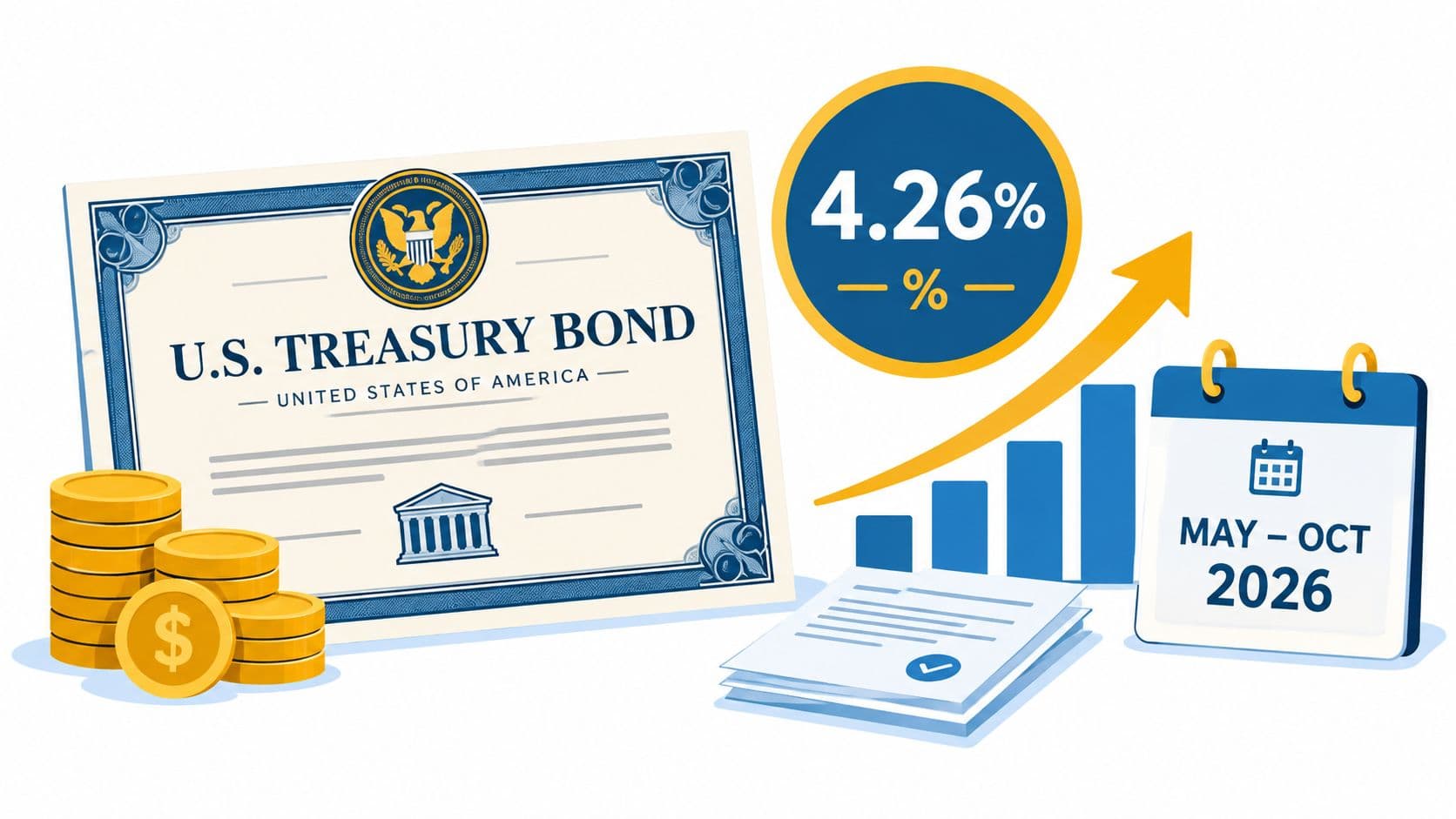
I Bonds issued from May through October 2026 earn a 4.26% annualized composite rate for their first six months, composed of a 0.90% fixed rate and a variable inflation component tied to CPI-U. The rate updates every six months based on inflation data. This figure is not a guaranteed return for the life of the bond.
If you've got cash sitting in a checking account and you're trying to decide whether to leave it there, move it, or park it somewhere safer, I Bonds are worth a serious look. They can be a sensible place for money that you want to protect from inflation without taking stock-market swings, but the headline rate only tells part of the story.
What Are I Bonds Paying Right Now
If you have cash sitting in checking and you are deciding whether to leave it there or put it in something that at least keeps pace with inflation, I Bonds are worth a close look. For bonds issued from May through October 2026, the current headline rate is a 4.26% annualized composite rate for the first six months, built from a 0.90% fixed rate plus an inflation-linked component that can change later. TreasuryDirect says the fixed rate stays with the bond, while the inflation piece can reset every six months. TreasuryDirect's current I Bond rate page
That rate is a starting point, not a full answer. A bond bought in that window can behave very differently depending on how long you hold it, because the fixed rate is locked in and the inflation component can rise or fall with later adjustments.
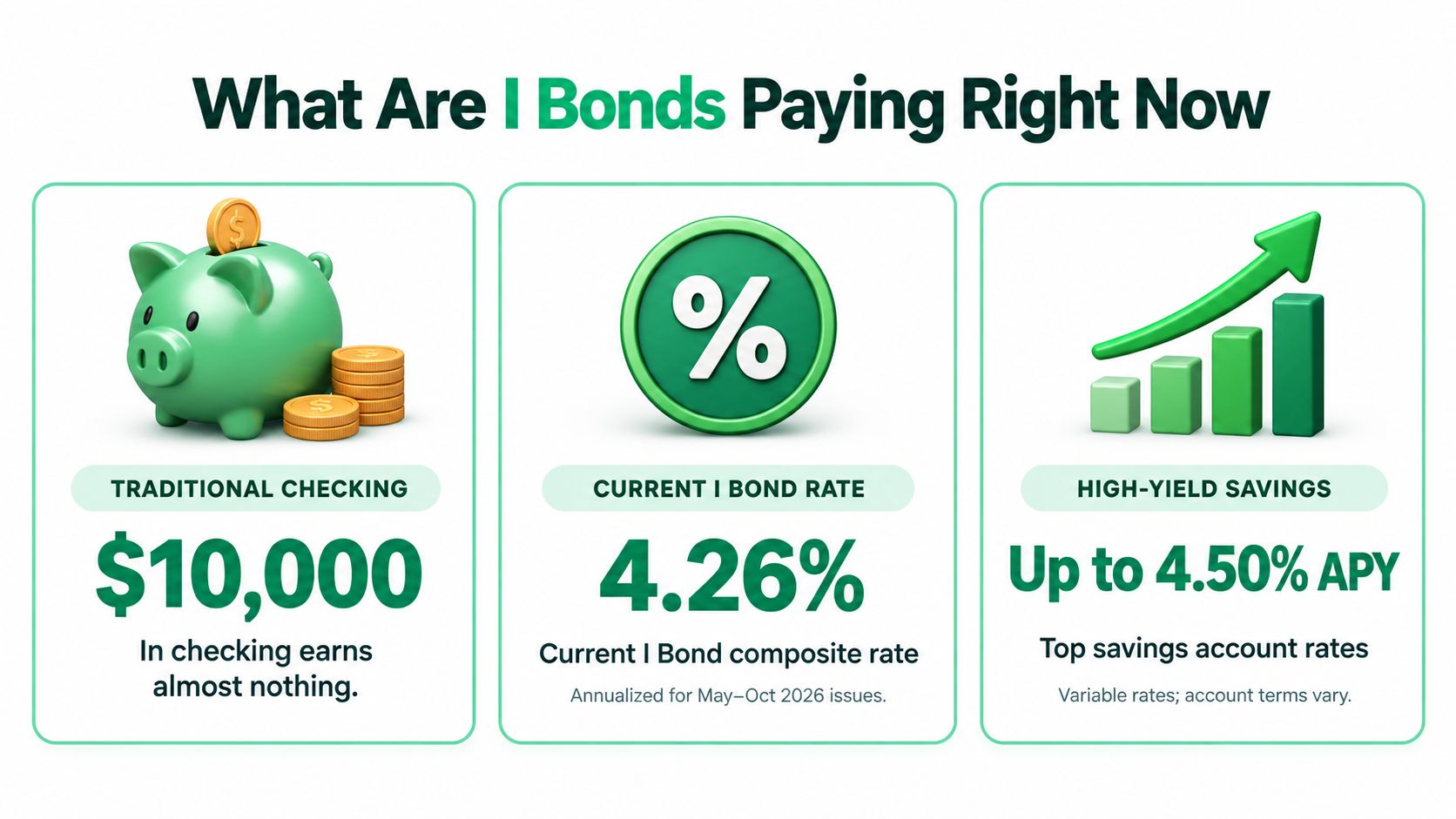
What that number really means
A practical example helps. If you are comparing an idle checking balance with an I Bond, the question is not just what the bond pays today. It is whether you can leave the money untouched long enough for the rate to matter, because early redemption changes the math.
Treasury's rate page shows that the same 0.90% fixed rate also applied in the prior issue window, but the composite rate there was 4.03% because the inflation component was different. TreasuryDirect's current I Bond rate page The shift is the point. “What are I Bonds paying now?” only makes sense if you also ask, “For how long, and under which inflation path?”
Practical rule: The current rate is useful, but the holding period is the decision variable that matters. If you might need the cash soon, the headline rate can look better than the outcome you actually keep.
How I Bond Rates Are Calculated
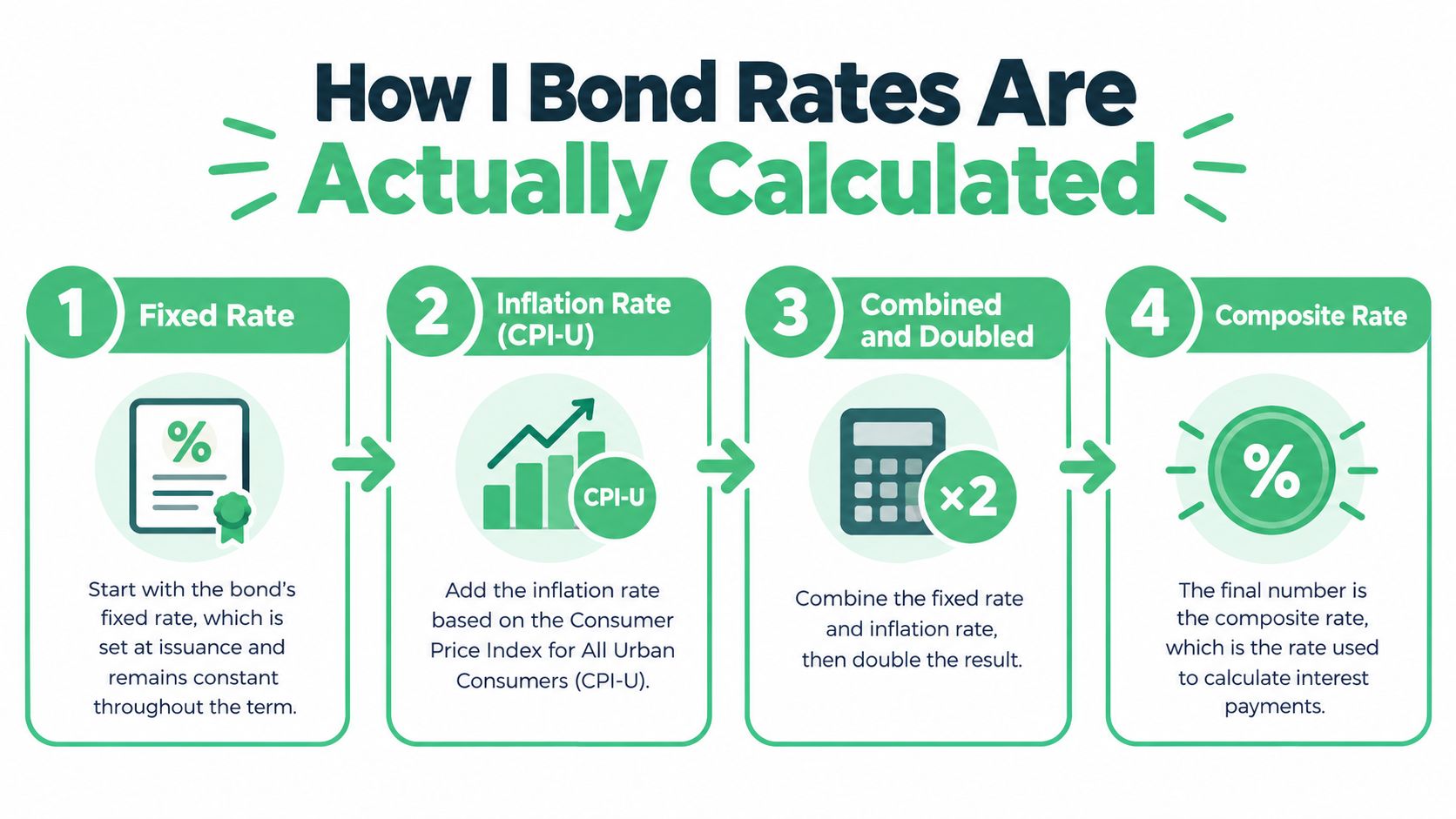
Treasury's formula is simple once you strip away the jargon. The composite rate = fixed rate + 2 × semiannual inflation rate + (fixed rate × semiannual inflation rate). Treasury ties the inflation piece to CPI-U, the Consumer Price Index for All Urban Consumers. TreasuryDirect's savings bond FAQ
Why the math matters
That multiplication term is easy to miss, but it changes the result. The yield is not just “fixed plus inflation,” because the two pieces interact. The formula makes that interaction explicit, and that is why the composite rate can come out a little higher than a simple add-up would suggest.
Using the November 2025 through April 2026 numbers, the 0.90% fixed rate and the inflation component produced a 4.03% composite rate. The next issue window moved to 4.26% as the inflation component changed. TreasuryDirect's current I Bond rate page
That is the part most casual comparisons miss. The fixed rate stays with the bond for its life, while the inflation component shifts with CPI-U, so the next six-month earning period can be better or worse than the last one. Treasury updates the fixed rate on May 1 and November 1, and the inflation rate changes on that same schedule. TreasuryDirect's savings bond FAQ
How to read the inflation windows
The May announcement reflects CPI-U changes from October through March, and the November announcement reflects changes from April through September. That is why the number on TreasuryDirect is always tied to a specific issue window. It describes one period, not a promise about the next one.
A bond with a fixed rate keeps that fixed piece for its entire life. The inflation piece is what moves the headline rate, and that is the part most people miss.
A compound interest calculator helps model what that looks like over different holding periods. The useful habit is to run the bond through your actual time horizon, because Treasury's formula drives the return, not the rate you wish you would get.
The Six-Month Rate Clock and Compound Interest Mechanics
Once you buy the bond, the clock starts running on your issue date, and that timing matters more than people think. A bond bought in June 2026 gets the 4.26% composite rate for its first six months, then Treasury recalculates the rate for the next six months based on whatever inflation has done by then. The 0.90% fixed rate stays with the bond for its life. TreasuryDirect's I Bonds page
What happens after month six
Interest accrues monthly, but Treasury adds it to the bond's value every six months. That means future interest is earned on a larger balance, which is the whole point of compounding. Over time, that monthly accrual plus semiannual addition is what gives I Bonds their practical appeal for patient money.
If inflation stays high, the inflation-linked part can keep the bond competitive. If inflation cools, the next six-month rate can drift lower, and the bond's return will follow that move. The bond doesn't care what you hoped the rate would be, which is rude but efficient.
A simple timeline
A June purchase is the cleanest way to visualize it. Months 0 through 6, you're earning the rate tied to that issue window. Month 6 brings a reset, month 12 brings another one, and every reset depends on the inflation data Treasury uses for that period. TreasuryDirect's I Bonds page
That's why I Bonds work best when you're comfortable leaving the money alone for a while. The compounding benefit gets better as the holding period stretches, but the rate path itself is variable, not predictable.
Hold them like a long-term inflation hedge, not like a parking spot for cash you might need next quarter.
One other point people skip: if you redeem before five years, Treasury takes back the most recent three months of interest. That penalty changes the actual return in a way the advertised rate never shows by itself. If you want a plain-English breakdown of how penalties affect your bill or payment plan in another context, Omni Tax Help explains IRS penalties in a way that makes the general logic of penalty math easier to follow, even though the rules themselves are different.
I Bonds vs. High-Yield Savings, CDs, and TIPS
I Bonds make more sense once you compare them with the usual cash alternatives. The right choice depends on expected return, access to your money, and how much rate risk you want to carry. For readers looking at broader yield options, alternatives to treasury bonds for stablecoins is a different question from household savings, but the trade-off logic is similar. If you want a fixed rate and a clearer maturity date, see how to invest in CDs.
| Vehicle | Expected Return | Liquidity | Tax Treatment |
|---|---|---|---|
| I Bonds | Variable, tied to inflation plus a fixed rate. The current issue window's first six months are at 4.26% annualized. | Limited early access. No redemption in the first 12 months, and a redemption before five years loses the last three months of interest. | Federal tax applies. They are exempt from state and local tax, which is a real advantage if you live in a high-tax state. |
| High-yield savings accounts | Variable and usually tied to short-term bank pricing, not inflation directly. | Typically easy access. | Interest is generally taxable at the federal, state, and local level where those taxes apply. |
| Certificates of deposit | Fixed for the term once you lock it in. | Less flexible if you need early access, because breaking the term usually has a cost. | Interest is generally taxable at the federal, state, and local level where those taxes apply. |
| TIPS | Inflation-linked, but priced and traded differently from I Bonds. | More liquid through market trading, but market prices can move. | Generally taxable at the federal level, and the income can also be taxable at state and local levels in many cases. |
Where each one tends to win
I Bonds fit best when inflation protection matters and the money can stay invested long enough to avoid the early-redemption haircut. High-yield savings works better when access matters more than inflation protection. CDs make sense if you want to lock a rate for a set term and are willing to give up flexibility. TIPS are the more market-driven inflation play, so the price you see and the price you get back can differ.
That is why I Bonds are a savings tool with an inflation hedge, not a one-size-fits-all cash substitute. If your first priority is easy access, they are a weak fit. If your first priority is preserving purchasing power over time, they deserve a close look, especially when you compare the after-tax result with the penalty for early redemption instead of staring at the headline rate alone.
The Hidden Math When I Bonds Lose Money
The headline rate only helps if the rest of the math works in your favor. A bond bought at 4.26% can still disappoint if inflation falls after the first six months, because the next reset may be lower, and a redemption before five years gives up the most recent three months of interest. Treasury also says the rate cannot fall below zero, but that does not make the return attractive by itself. TreasuryDirect's comparing EE and I bonds page
The penalty changes the effective return
If you redeem early, the three-month penalty cuts into the payout in a way that is easy to underestimate. On a $10,000 bond, three months of interest at 4.26% is roughly $106 before compounding effects, so an early sale can erase a meaningful slice of the gain. A bond sold around month 11 does not behave like a full-year hold, and the same penalty still applies at month 36 until the five-year mark passes.
The rate history matters here, but the details are already covered above, so the key point is simple: the headline rate is only the starting point. What matters is how long you can leave the bond alone and what inflation does after the first reset.
How the holding period changes the result
For a one-year holder, the first six months matter most, because the later six months may reset lower and the early-redemption penalty can bite if the bond is cashed out before year five. For a three-year holder, the bond has more time to absorb changing inflation, but the penalty still applies. At five years, that penalty disappears, and the comparison becomes cleaner.
The useful mental model is straightforward:
- Falling inflation: later rate periods can weaken, so the headline rate looks better than the path of actual returns.
- Stable inflation: the bond behaves more predictably, but the early penalty still makes short holds less appealing.
- Rising inflation: the bond can improve over time because the inflation component lifts future resets.
If you need the money soon, keep it liquid. If you can leave it alone, compare the after-tax, after-penalty outcome instead of staring at the headline rate like it is a fortune cookie. That is why I Bonds work best as an inflation-sensitive savings allocation with restricted liquidity, not as a stand-in for cash you may need on short notice.
How to Buy I Bonds and What Limits Apply
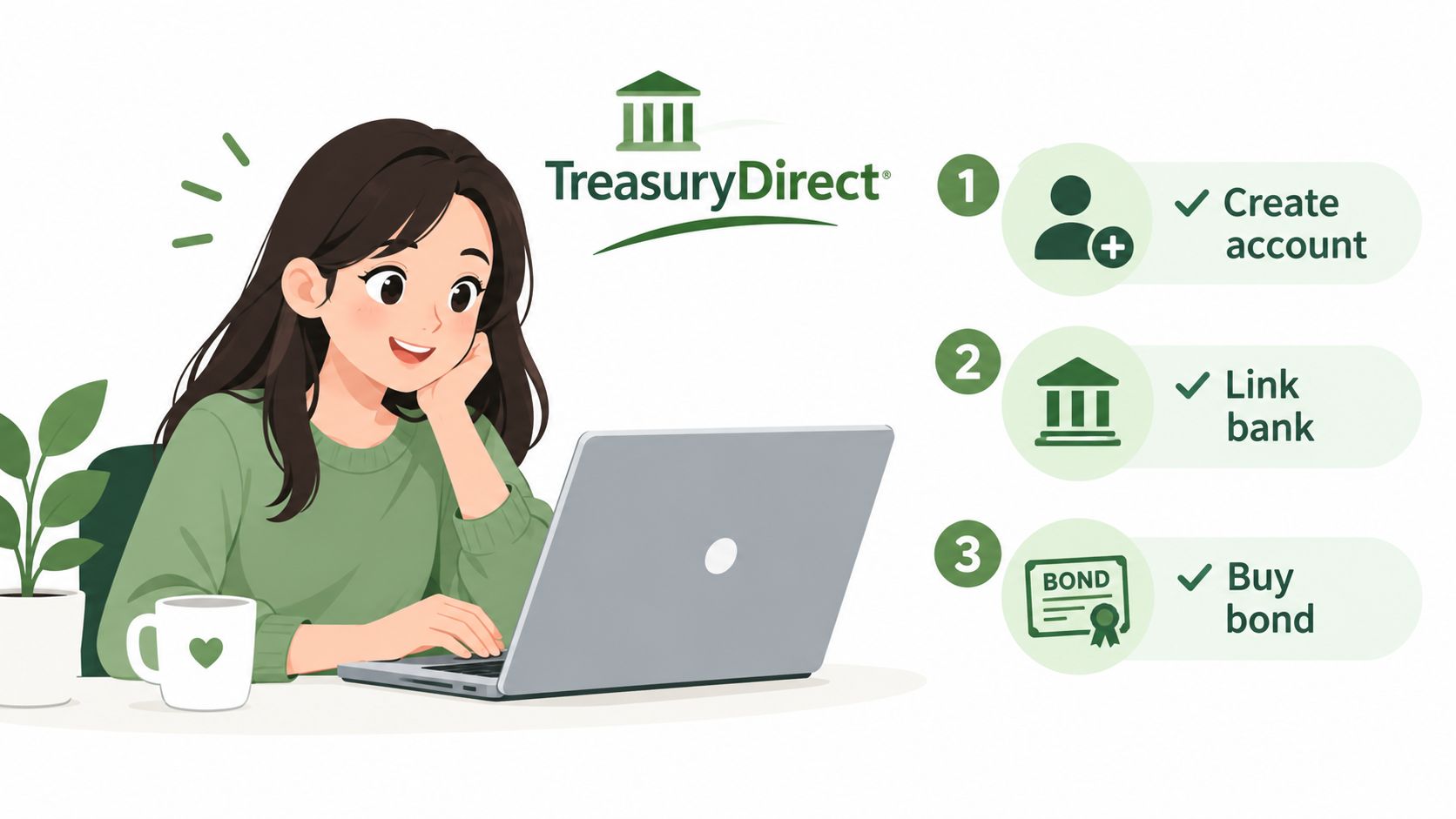
Buying an I Bond is pretty simple once your TreasuryDirect account is set up. You need a Social Security number and a bank account, and the account setup is free. After that, you can buy electronically through TreasuryDirect, which is the most common route.
The limits that actually matter
TreasuryDirect states that electronic I Bonds have a $25 minimum purchase and a $10,000 annual electronic purchase limit per Social Security number. You can also buy up to $5,000 in paper I Bonds using a federal tax refund. TreasuryDirect's savings bonds page
The first-year lockup is the part people regret forgetting. I Bonds cannot be redeemed during the first 12 months, and redeeming before five years triggers the loss of the last three months of interest. That makes them unsuitable for money you may need on short notice.
Ownership choices
You can buy as a single owner, with a co-owner, or with a beneficiary. That flexibility matters for estate planning and for people who want a simple transfer arrangement without turning the account into a project. Keep the ownership form aligned with the reason you're buying in the first place.
A useful way to think about the purchase process is to treat it like a checklist rather than a research marathon:
- Open the TreasuryDirect account.
- Link your bank account.
- Choose the registration type.
- Buy within the annual limit.
- Plan the holding period before you click submit.
If the money is earmarked for later, the process is straightforward. If you're still unsure whether you'll want it back soon, that's the decision point, not the account setup.
Who Should Buy I Bonds and Who Should Skip Them
I Bonds make sense for savers who want inflation protection with no market risk, and for people who can leave the money alone long enough to make the lockup tolerable. They also work for some education-related planning, since qualified tuition payments are federally tax-free, and for people who want a government-backed diversifier in a broader cash strategy. If you're building liquid savings first, the stronger move is usually to finish your emergency fund before you start locking money away, and this emergency-fund guide fits that order of operations well.
Good fit
- Longer horizon savers: If the money can stay put for five years or more, the redemption penalty stops being the main story.
- Inflation worriers: If preserving purchasing power matters more than getting a fixed coupon, I Bonds deserve a spot on the shortlist.
- Careful planners: If you like government-backed assets and can tolerate a rate that moves around, the structure is useful.
Poor fit
- Emergency funds: If you might need the cash within 12 months, the lockup is a dealbreaker.
- Short-term rate chasers: If you just want the highest looking number today, a rate reset can wreck the mood.
- People who need certainty: If you want a fixed, known path, the inflation link introduces too much variability.
The clean judgment is this. Buy I Bonds when you want a long-term inflation hedge and can live with limited access. Skip them when liquidity is the priority or when you expect to need the cash before the penalty window closes.
Get more posts like this
One short, useful email each Friday. Free, no spam, unsubscribe anytime.