Newsletter · Issue
💰 5 Fact Friday: The Money Printer Is Back
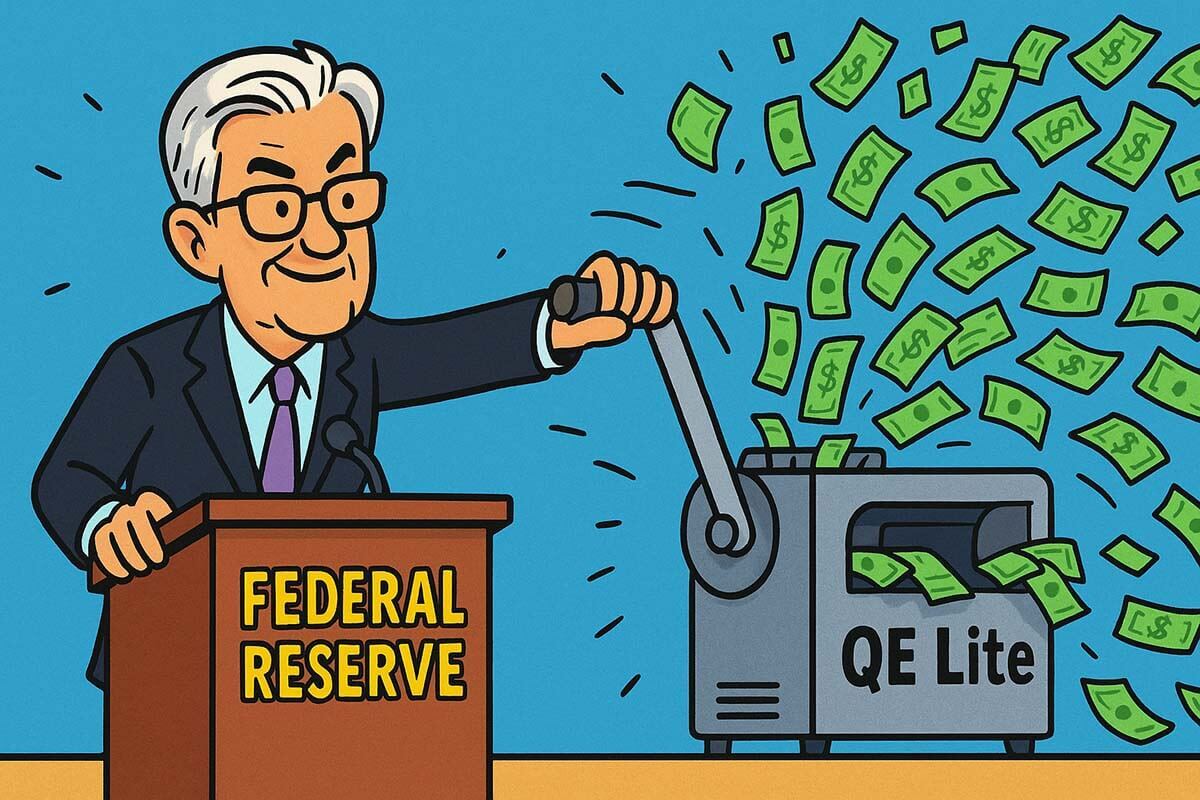
Starting today, the Fed will buy $40 billion in Treasury bills each month. Officials swear this is not quantitative easing and is not intended to prop up markets. They frame it as a plumbing fix.

Daniel Anderson
Editor, The Money Maniac
December 12, 2025
💰 5 Fact Friday: The Money Printer Is Back
Starting today, the Fed will buy $40 billion in Treasury bills each month. Officials swear this is not quantitative easing and is not intended to prop up markets. They frame it as a plumbing fix.

Daniel Anderson
December 12, 2025
In partnership with

Good morning, Maniacs!
The Dow and S&P 500 both notched fresh records this week, even as tech stocks took a breather after Oracle reignited Wall Street’s favorite fear: AI overspending.
The Fed delivered its third cut of the year, Powell basically ruled out a January hike, and traders cheered a stronger-than-expected outlook for the U.S. economy.
Then Broadcom piled on with a clean earnings beat, sending chip stocks ripping in the after-hours, and most likely pushing the market higher to end the week.
Inside today’s edition: why the Fed’s newest “not QE” program might actually be QE-lite, how a hostile takeover turned Warner Bros into the most entertaining drama of the year, and the sneaky Instacart pricing trick you probably didn’t know about.
Let’s dive in! 👇
STOCKS
1. The Warner Bros Madness Explained 🎬
The wildest corporate soap opera of the year now has two competing endings — and both could reshape Hollywood and the media landscape for a decade.
First, the Timeline
June 2025: Warner Bros Discovery struggles with debt, streaming losses, and cord-cutting. CEO Zaslav prepares to split the company into two pieces.
October: Paramount submits several unsolicited bids to buy the company. WBD rejects them all and announces a formal auction instead.
November: Netflix, Paramount, and Comcast all make credible offers.
December 5: Netflix wins the auction and signs a friendly deal to buy the crown-jewel assets for $82.7 billion.
December 8: Paramount comes back with a “hostile” all-cash offer to buy the entire company for $108.4 billion.
What Netflix Is Trying to Buy
Only the high-growth pieces:
HBO + Max (Succession, Game of Thrones, The Last of Us)
Warner Bros. film & TV (Barbie, Harry Potter, DC)
The entire Warner media library
CNN, TNT Sports, Discovery, HGTV, and the other traditional TV networks would be spun out into a separate debt-laden company called Discovery Global.
Netflix would become the undisputed king of premium content with control of ~30% of the streaming market. With that much market dominance, Trump said the deal “could be a problem.”
What Paramount Is Trying to Do
Paramount wants everything. No spin-offs and no leftovers. The plan is to merge all of WBD’s IP and studios with Paramount’s networks and Paramount Plus.
Why it’s messy: Paramount’s bid is partly financed by sovereign wealth funds from Saudi Arabia, Qatar, and the UAE. This pulls national security concerns into the picture, especially since CNN is involved.
Why It’s a Hostile Bid
A friendly deal needs Board approval, which Netflix already got. Paramount is now appealing directly to shareholders with a higher all-cash offer, saying:
“Netflix offered you $27.75. We’ll pay $30.00 right now.”
If enough shareholders accept, the Board loses control, and Paramount’s deal moves forward.
What Happens Next
Both paths face heavy scrutiny, but for different reasons:
Netflix must clear antitrust regulators who hate letting giants get bigger.
Paramount must survive political scrutiny over foreign financing and news influence.
This deal won’t wrap up quietly. Expect lawsuits, regulatory reviews, shareholder votes, and televised drama. The financial plot twists here might be better than anything on HBO.
ECONOMY
2. The Fed Turns The Money Printer Back On 👀
The Fed delivered its widely expected 0.25% interest rate cut this week.
The move itself wasn’t the surprise. The real story came from the new projections, especially what policymakers expect in 2026.
The tone was cautiously optimistic. Here is what stood out:
GDP growth for next year is now expected to hit 2.3%, up from 1.8%
Unemployment is projected to hold steady at around 4.4%
Core PCE inflation is expected to land at 2.5%
The median view for 2026 interest rates is a 3.4% federal funds rate (down from ~3.6% today)

In other words, the Fed sees growth picking up, inflation cooling but not conquered, and the labor market holding steady.
Then came the twist: The Fed will start buying about $40 billion in Treasury bills each month.
Officials swear this is not quantitative easing and is not intended to prop up markets. They frame it as a plumbing fix. They’re simply adding back liquidity after removing too much, and making sure short-term markets don’t seize up.
But some market participants disagree.
On paper, this behaves a lot like a softer version of QE. The Fed creates new reserves, scoops up short-term government debt, and hands the banking system more cash to play with.
Call it maintenance, call it technical, call it whatever you want. Historically, when new liquidity appears, it often finds its way into stocks, crypto, and the further edges of the risk curve.
Zooming out, the message is clear.
The Fed is cutting to protect the labor market, trying to keep inflation from waking back up, and quietly adding liquidity around the edges. It’s a more bullish stance than we’ve seen in years.
FAST FACTS
3. Markets, Markups, And Musk’s Moves 🚀
🌍 International stocks regain momentum: Non-US markets beat the S&P 500 in 2025 and still trade at steep discounts. Fidelity managers see improving fundamentals and attractive opportunities heading into 2026. [Read]
🍪 Instacart’s invisible markups: Consumer Reports found the app shows shoppers up to five different prices for identical items. Some households could unknowingly pay 23% more per grocery trip. [Read]
🚀 SpaceX eyes a 2026 IPO: Elon Musk confirmed reports that SpaceX is preparing to go public, eyeing a $1T valuation and a $30B raise. Starlink, not NASA, now drives most of its revenue. [Read]
🚜 Farmers get a $12B cushion: The Trump administration approved “bridge payments” for U.S. farmers facing pressure from ongoing trade conflicts, especially reduced Chinese demand for American crops. [Read]
💻 CHIPS Act money goes VC-mode: The U.S. will invest $150M in xLight, expanding its semiconductor push. The deal continues the White House trend of taking equity stakes in private tech companies. [Read]
🤖 Nvidia gets partial China greenlight: Trump approved H200 chip sales to select Chinese buyers, with the U.S. government taking a 25% revenue share. The same model may apply to AMD and Intel next. [Read]
⚽ World Cup odds tighten: Spain remains the 2026 favorite (17%), followed closely by England, and then France. Brazil and Argentina sit just behind at 10%. [Read]
TAX
4. Your New 401(k) Limits Are In 📊
The IRS just released the new 401(k) contribution limits for 2026, and the big picture is simple: you can save a little more, but the age rules matter more than ever.
Employee Contribution Cap
2025: $23,500
2026: $24,500
These totals apply across all your 401(k)s. Two jobs ≠ double the limit.
Total Contribution Cap (You + Employer)
2025: $70,000
2026: $72,000
If you hit the max you can contribute as an employee, you may be able to make after-tax contributions up to this full cap. But not all plans allow it, so check with your plan administrator.
Catch-Up Contributions
If you're 50 or older, you get extra wiggle room beyond the caps above:
2025:
Ages 50-59 or 64+ → +$7,500
Ages 60-63 → +$11,250 (if your plan allows)
2026:
Ages 50-59 or 64+ → +$8,000
Ages 60-63 → +$11,250 (if your plan allows)
This quirky 60-63 “super catch-up” rule could let some savers contribute over $35K in a single year.
2025 | 2026 | |
|---|---|---|
Employee Cap | $23,500 | $24,500 |
Employee + Employer Cap | $70,000 | $72,000 |
Catch-Up Contributions | $7,500 / $11,250 | $8,000 / $11,250 |
Avoiding Mistakes
Contribute at least enough to get your full employer match (free money is undefeated).
If you switch jobs midyear, track your totals — excess contributions get taxed twice if not fixed by April 15.
Roth and traditional 401(k)s share the same limits. The IRS doesn’t let you double-dip.
Your retirement accounts just got a little more headroom! Now it’s on you to fill it.
TRIVIA
5. What Income Cracks The Top 10%? 💵
Household incomes vary widely across the country, but one thing’s clear: reaching the top 10% takes a lot more than it used to.
How much does a U.S. household need to earn to break into the top 10% of incomes?
Take your guess:
A. $130,000
B. $200,000
C. $265,000
D. $375,000